Episode Transcript
[00:00:00] Speaker A: I've never in my life not had a horse.
[00:00:02] Speaker B: You competed?
[00:00:03] Speaker A: Yeah, I ran barrels my whole life. Well, the last time was probably 2013.
[00:00:08] Speaker B: We're in Texas. Right. So it's kind of like iconic, you know what I mean? Respect is a big deal. And I think that's something that a lot of people here at Moss have.
[00:00:15] Speaker A: For you, it's a pride thing. It's a, you know, I want to be the one that they go to. I want to be the one that they trust with it. Yeah, you might not know all the answers, but I'll be damned if I don't figure it out.
[00:00:24] Speaker B: I mean, you were humble about it, too.
[00:00:26] Speaker A: Oh, I'm not afraid to ask. I'm going to learn it and I'm going to figure it out.
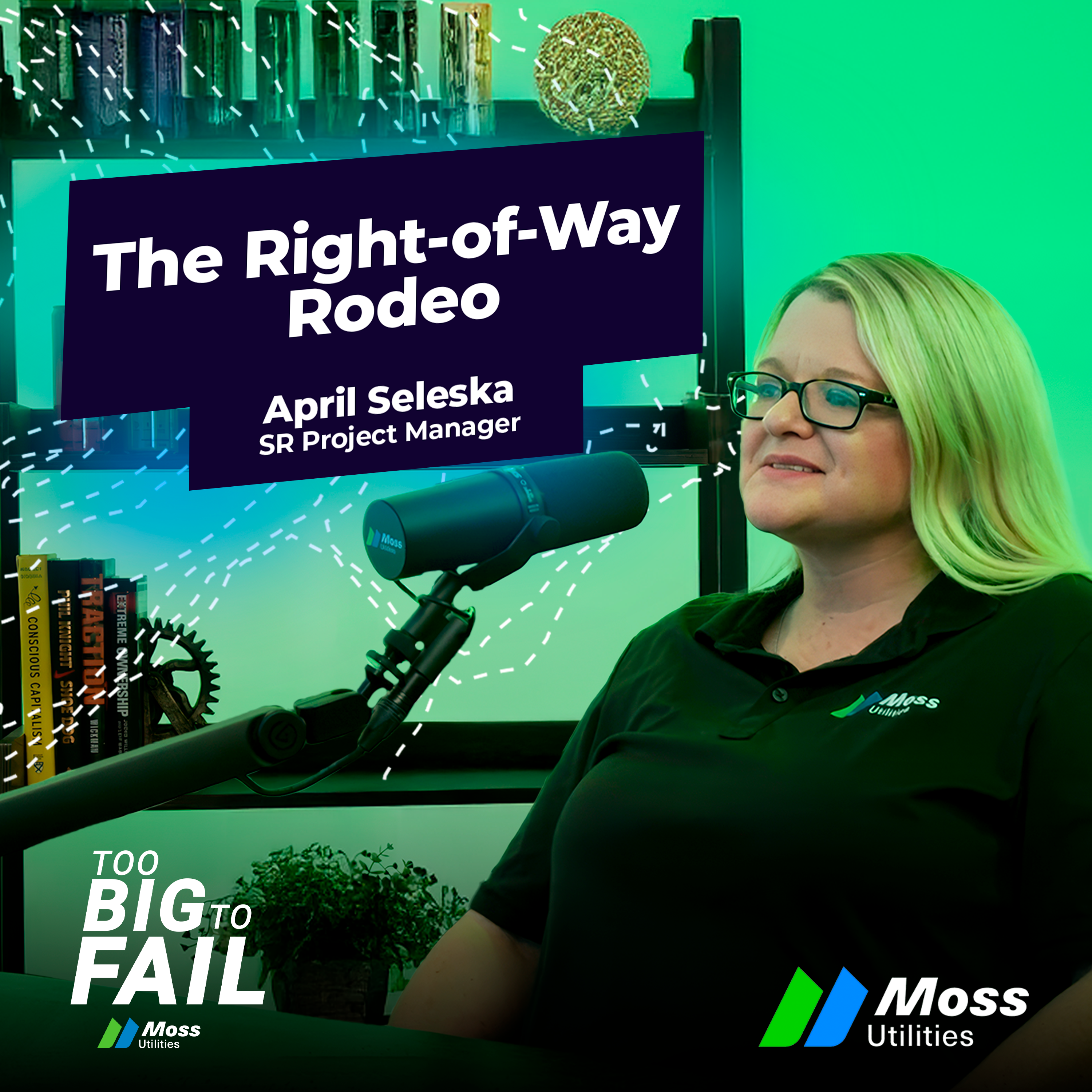
[00:00:29] Speaker B: Women in construction is a big deal. You're a big deal. A lot of people respect you, and you definitely have made a name of yourself for yourself here.
Well, I just want to say thank you. I appreciate you coming on today.
Too big to fail is, you know, something that we are trying to live by here at Moss. And when you hear PMs, you know, automatically you assume it's a male project manager. Well, not the case. Right, right.
Women in construction is a big deal.
Respect is a big deal. And I think that's something that, you know, a lot of people here at Moss have for you is respect. Right. So you said that you were born in Amarillo, but you weren't necessarily raised there.
[00:01:28] Speaker A: Correct. So born in Amarillo, and then we basically moved, for lack of a better word, every year until I was in high school. From Amarillo to Waco to China Spring, which is where I finished high school.
[00:01:42] Speaker B: Why were you moving? Like, where was your parents moving so much?
[00:01:45] Speaker A: So my parents were together. My mom was a single mom doing the best she could.
[00:01:49] Speaker B: So you're just kind of trying to find success in different areas. Was there a place in particular that you liked the most?
[00:01:57] Speaker A: China Spring.
[00:01:58] Speaker B: China Spring? Why?
I don't know China Springs.
[00:02:01] Speaker A: I mean, it's outside of Waco. It's really the only place that I ever really felt like I fit in.
[00:02:06] Speaker B: They have good food.
[00:02:08] Speaker A: No, it's a hole in the wall. I mean, it's bigger now, but it's west of Waco.
[00:02:13] Speaker B: I never heard of it. China Spring.
[00:02:15] Speaker A: There's one chinaberry tree and there's one spring.
[00:02:18] Speaker B: All right. And then, you know, we were talking about how, you know, you come in every morning, you know, 5, 30, 6 o'. Clock. You know, when I first started at Least that's when I noticed that you were coming in, you know, has it always been like that?
[00:02:34] Speaker A: You know, for a long time I was burning the midnight oil and really had to adjust myself and realize that I can have a life outside of work. I do not have to live here to, you know, and it wasn't here that I set that precedent on myself.
I wasn't forced to do that. It's just the way it was. And I realized that I needed to back off a little bit. And so, yes, I do still come in very early. You know, sometimes I'll get here 4:30, 5:00'.
[00:03:02] Speaker B: Clock.
[00:03:03] Speaker A: But I try to make it a habit to leave on those days. Specifically, I try to make it a habit to leave at least by 4 o'.
[00:03:09] Speaker B: Clock, you know. What are some hobbies that you grew up doing?
[00:03:14] Speaker A: So I've rodeoed my whole life.
Um, I don't get to do it as much anymore, actually. I don't do it at all anymore. You know, I do have horses at home still. My son ropes actively.
Not as much as he used to anymore, but he really went hard in his high school years, so it was really focused on him at work.
[00:03:31] Speaker B: How old were you when you first learned how to ride?
[00:03:35] Speaker A: I got my. My first horse when I was five.
[00:03:37] Speaker B: You were five?
I wish I had a horse when I was five.
[00:03:41] Speaker A: Yeah, he was Diablo.
[00:03:43] Speaker B: Were you scared of them at any point, like, or were you just kind of like you were like, born into it?
[00:03:47] Speaker A: I was born into it. I mean, we've. I've never in my life not had a horse.
[00:03:51] Speaker B: Not had a horse. Never had a horse. And you competed?
[00:03:55] Speaker A: Yes. Yeah, I. I ran barrels my whole life until probably.
Well, the last time was probably 2013.
Actively, you know, I mean, pursuing it.
So.
[00:04:07] Speaker B: Nice. Well, that's. I mean, that's pretty cool, I mean, coming from, you know, granted, we're in Texas, right? So that's kind of like, iconic, you know what I mean?
[00:04:17] Speaker A: Right.
[00:04:18] Speaker B: You're born into, like, the whole rodeo deal and whatnot.
Did you, you know, like, with any, like, prizes or anything? I don't know how that works. Buckles or whatever.
[00:04:30] Speaker A: Right, Buckles. I want a saddle.
Money. You know, never did really get to go, you know, big time. You know, that's every little girl's dream is, oh, I'm gonna go big time.
Most of the time, you're not.
[00:04:43] Speaker B: Do you remember what your fastest run was?
[00:04:46] Speaker A: It all really depends on the arena, honestly.
[00:04:48] Speaker B: So they're different for every are, you know. Yeah, because I don't know much about it. I know that there's. It's a sport, right? Definitely a sport. Like, you know, there's the bull riding, bell racing and. All right.
[00:04:58] Speaker A: But yeah, no, it's. It's different for each. Each arena has a different pattern. There's a short pattern, there's a standard pattern. There's, you know, and you can go to Calgary and the Stampede and it's, you know, it's a 30 second pattern which is fast, so. Which is not fast on a regular day.
[00:05:14] Speaker B: Nice, Nice. So what was one of your like first jobs out of high school or.
[00:05:18] Speaker A: During high school or, you know, so when I moved up here, I was going to college and I worked for actually a cleaners in South Lake and found out I was pregnant.
So I was working there as well as working at a.
Managing a barn.
Excuse me, a barn. And going to school at night.
[00:05:40] Speaker B: So you're busy?
[00:05:42] Speaker A: Busy. Super busy.
[00:05:43] Speaker B: You're really busy.
[00:05:44] Speaker A: Worked there in the mornings and then at night and then went to south like to work.
[00:05:50] Speaker B: You've never been scared to get dirty?
[00:05:52] Speaker A: I'm not scared to get dirty.
[00:05:54] Speaker B: Scared to get dirty?
[00:05:55] Speaker A: No.
[00:05:55] Speaker B: Yeah, definitely. I think everybody deserves to like really focus on themselves. And I know you like shooting, right?
[00:06:01] Speaker A: Correct.
[00:06:01] Speaker B: And so I love clay shooting. Clay shooting is fun. But you.
[00:06:05] Speaker A: I've really been able to get into that more, you know, being at Moss, being that we have so many people here that like to shoot and we shoot as a team and we shoot and we shoot very well together, you know, I mean, you and I shoot very well together.
[00:06:20] Speaker B: I remember the first time that I went shooting, it was kind of like, hey, they needed a shooter.
[00:06:25] Speaker A: Right.
[00:06:25] Speaker B: And so I was like, I don't have a shotgun but I will find one.
Because if I don't.
[00:06:30] Speaker A: If you say no this time, you're not going to get invited again.
[00:06:33] Speaker B: Yeah. So I definitely said yes. Yeah, I did not shoot very well. I don't think we kept track. Track, but it was definitely fine.
[00:06:41] Speaker A: Yeah, it's a lot of fun. And there's.
What is there 15 or 20 of.
[00:06:46] Speaker B: Us that I've never really counted them up. Counted them up? No.
[00:06:51] Speaker A: Yeah.
[00:06:51] Speaker B: What's been your highest score?
[00:06:53] Speaker A: High score? 88.
[00:06:54] Speaker B: 88.
Was that at a tournament?
[00:06:57] Speaker A: Yeah, it was actually at a tournament a couple weeks ago.
[00:06:59] Speaker B: Oh, wow.
[00:07:00] Speaker A: So.
[00:07:01] Speaker B: Because the last tournament that I went to shoot with you, it was the.
Oh man, I can't remember the name of it.
[00:07:09] Speaker A: Porkapalooza. Is that the one?
[00:07:11] Speaker B: No, no, that one it was with.
We went with Dan it was up in defender.
[00:07:20] Speaker A: Was it, Was it a defender or was it the one indicator?
[00:07:23] Speaker B: No, Defender.
[00:07:24] Speaker A: I don't remember.
[00:07:25] Speaker B: We just went not too long ago.
[00:07:27] Speaker A: I don't remember the name of it, though.
[00:07:28] Speaker B: I don't remember the name of it. But you shot a 78 there, right?
[00:07:31] Speaker A: No, that was the 88. That's when I won the buckle.
[00:07:34] Speaker B: Oh, that. I. I think I shot at 78. I'm sorry. Yeah, I didn't shoot as good as you, but to be fair, to be fair, I had it. To be fair, I had not shot in like almost a year.
[00:07:45] Speaker A: Right.
[00:07:46] Speaker B: So. But it's definitely fun.
Let's talk a little bit more about how'd you get into the construction industry or did you get into like, like a trade partner?
[00:07:57] Speaker A: So I actually met a.
When I worked at the cleaners, you know, we were actively, you know, rodeoing and doing stuff like that. So through that, I met a gentleman that owned a plumbing business and knew that I obviously did not want to work for the dadgum cleaners for the rest of my life.
So he actually took me in over there and I worked for him for, I want to say, two years.
And in that time I'd had Taylor. And so Taylor went to work with me for the first year. And then when he got to where he was pulling the blueprints off the table, he was like, can't really do this anymore.
So then I left there and I went to AutoNation for 10 years.
And I was on it there for 10 years.
[00:08:38] Speaker B: So AutoNation, is that the place that, like, sells cars?
[00:08:41] Speaker A: Yes.
[00:08:42] Speaker B: So are you selling?
[00:08:43] Speaker A: I wasn't selling cars, no. I was doing the. I was in the IT department, managing all the access to. To the sales people and to all the.
[00:08:51] Speaker B: Interesting. Interesting.
[00:08:52] Speaker A: Doing all of that. Yeah.
[00:08:55] Speaker B: So you went from plumbing to autonation.
[00:08:57] Speaker A: Correct.
Back to construction. Construction, yes. While I was at that, the plumbing business, I met a former.
How do you say it? I don't even know how to say it.
[00:09:11] Speaker B: Friend.
[00:09:11] Speaker A: Yeah, Met a friend and we stayed friends throughout the time that I was at autonation. And there was a spin off business coming down here from another state that he was gonna start a division of. And it was a good opportunity for me and a lot more money. You know, I was really. Basically, I was maxed out where I was. And so he gave me the opportunity to come over and actually the.
My, my boss over there, I was, you know, terrified to tell her, you know, not a good quitter.
So she actually threatened to fire me if I didn't Go.
[00:09:51] Speaker B: Interesting. Interesting.
Threatened to fire you if you didn't go?
[00:09:55] Speaker A: No.
[00:09:57] Speaker B: Well, I mean, I guess that's a good thing that she was trying to look out for your best interest.
[00:10:01] Speaker A: Oh, for sure.
[00:10:01] Speaker B: Right, for sure. I mean, you had a newborn baby or whatever on the, you know, with you, and so you're trying to pay bills and all that good stuff.
[00:10:11] Speaker A: Yeah. Taylor was probably 10, 10 or 11 by then.
[00:10:15] Speaker B: 10 or 11, okay, so he was a little bigger.
[00:10:17] Speaker A: Yeah.
[00:10:18] Speaker B: Yep.
[00:10:19] Speaker A: And then we were there for about a year and then that's, you know, he, he started his own business and when he started his own business, then I went with him.
[00:10:28] Speaker B: And that was that the first utility company that you've.
[00:10:30] Speaker A: That was the second utility company.
[00:10:32] Speaker B: The second utility company that you worked, correct?
[00:10:34] Speaker A: Yes.
[00:10:35] Speaker B: Okay. And how long were you there for?
[00:10:37] Speaker A: 10 and a half years.
[00:10:38] Speaker B: 10 and a half. And you started there as a PM? PM did you like, have any like before the other company, though? Did you have any other, like, utility experience?
[00:10:47] Speaker A: Nope.
It was baptism by fire.
[00:10:50] Speaker B: It's just.
[00:10:51] Speaker A: You just, you either want it or you don't. Eat it, sleep, breathe. You're gonna learn it or you're not.
[00:10:57] Speaker B: Yeah.
[00:10:57] Speaker A: And that's, that's the way I was taught and that's the way that I. That, that's the way that I function.
So.
[00:11:04] Speaker B: Yeah.
What, like, what was. Do you remember, do you remember what was one of your first projects?
[00:11:11] Speaker A: It was a project in Denton. It was a.
I can't remember if it was a force main or not, but I do. I mean, I remember the exact location of it, but it was, it was a project in Denton and it was tough and it was.
Thankfully we had actually a lot of the superintendents that are here, I actually worked with over there, so I was fortunate enough to learn from them.
[00:11:35] Speaker B: How's your relationship like with the foreman and. Or not the foreman, but like the teams, like. Because, you know, different utility companies have different relationships as far as like the pm, Superintendent, General, Superintendent, foreman. Right. Like, it is your interaction with them.
[00:11:49] Speaker A: We had a lot of interaction, but it all comes on trust, it all comes on relationships. It comes on how you treat them is how they're going to treat you.
[00:11:58] Speaker B: Yeah.
[00:11:58] Speaker A: If you respect them, they're going to respect you. You treat them like trash, they're going to treat you like trash.
[00:12:03] Speaker B: I mean, you were humble about it too.
[00:12:05] Speaker A: Oh, I'm not afraid to ask. I'm not afraid to ask, but I'm going to learn it and I'm going to figure it out.
[00:12:12] Speaker B: So learning utility work at these other companies.
Worked at one for 10 years.
And now you're here at Moss Utilities. When did you start? Was it two, three years ago now?
[00:12:24] Speaker A: August of 23.
[00:12:26] Speaker B: August of 23.
[00:12:27] Speaker A: Officially two years.
[00:12:28] Speaker B: How do you feel about the change?
[00:12:31] Speaker A: It was a good change. It was a really, really good change.
It's a.
It's a different. It's a different.
Yeah, it's a different atmosphere. It's a different fit.
The team division here is not team division. It's not even division. It's. The team atmosphere here is you're not by yourself. You don't have to do anything by yourself. You don't have to tackle it by yourself.
You can ask for help if you need it. They're going to offer it to you anyway.
So the culture here is completely different.
[00:13:06] Speaker B: Would you say that's something that makes Moss who they are?
[00:13:09] Speaker A: Yes.
[00:13:09] Speaker B: Is their culture.
[00:13:10] Speaker A: Yes.
[00:13:12] Speaker B: What was your first project here?
[00:13:14] Speaker A: One of the first ones was 2346 Birchway in Sherman.
[00:13:20] Speaker B: Those apartments? Yes, I think I remember those.
[00:13:23] Speaker A: Yep. And then 2350, which was Kroger.
[00:13:26] Speaker B: That one was with Cody. No, Cody was doing that. Yeah. Well, we've had some pretty cool projects. I think what I've noticed, you know, throughout you being here is they've given you a lot of high profile projects. Right.
Some that we probably can't even say the name of because of who they are.
Right. But that speaks volume of like who you are because they're trusting you with these projects. How do you feel about, you know, getting those projects that like, hey, just give her this big.
[00:13:54] Speaker A: I mean it's, it's a, it's a pride thing. It's a, you know, I want to be the one that they go to. I want to be the one that they trust with it.
And I feel like, you know, we've built a good team and we keep building on that team and, you know, I'm blessed to be part of it.
[00:14:11] Speaker B: I think seeing you, not necessarily seeing you come in every day in the mornings like, but you like, you definitely set an example for all these other PMs, APMs, Moss U people coming into Moss. Like you give them an example of like your work ethic because like you'll be here like at six o' clock in the morning, you know what I mean? You'll leave at 4:30, 5:30, you know, every day.
Has it always been like that?
[00:14:35] Speaker A: Like I've actually slacked off a little bit.
I was working seven days a week for a while and not because I had to it was because I felt like I had to. It was something that I had made myself do.
I was doing so many different roles that there wasn't enough time in the day.
[00:14:58] Speaker B: So you weren't just PMing other companies.
What were the tasks where you.
[00:15:02] Speaker A: I was the senior pm. I was in charge of doing all of the billings.
The other PMs would bring me their billings. I had to enter all of their billings, I had to enter all of the accounts receivable. I received all the money, I did all the pay apps, I did all the collections.
If liens had to go out, I did all of that.
[00:15:24] Speaker B: I think I remember you mentioning something even to the extent where you were even helping out with Christmas parties or something like that.
[00:15:31] Speaker A: Yes. So I was in charge of helping get all of the, like, gifts for the field and coordinating with all of the vendors and all of that, and it was a great pleasure. You know, I loved doing that for the field.
I love seeing the field reap the benefits of their hard work all year long.
[00:15:50] Speaker B: Yeah, absolutely. Absolutely.
[00:15:52] Speaker A: Do I want to plan the parties now? No, thank you.
No, thank you. I'm not offering that.
[00:15:57] Speaker B: That's funny.
I think we got enough people to where we can effectively plan a good Christmas party for the field. Yes. But, yeah, they definitely deserve it.
Kind of like what you said, Reap the benefits because it's their work.
[00:16:11] Speaker A: Yeah. Because, I mean, without them, I don't have a job. You don't have a job.
[00:16:14] Speaker B: That's what I've always.
[00:16:15] Speaker A: None of us have.
[00:16:15] Speaker B: Without them. I don't think they.
I think some of them sometimes think about it, but I don't think they realize how big of an impact it is that they're the ones that are doing the work out in the field.
[00:16:28] Speaker A: Yeah. I mean, literally, without them, I don't have a job, and I don't either. And. And that's. That's. That's huge, you know, and. And to be able to see the guys that, you know, there's lots of guys that, like I said, I've worked with previously to. To see them succeeding here and to see them come in and be like, oh, Ms. April, you know, this and this and this. And you're, you know, you're part of the reason that Miss April comes along, because they all refer to me that way. But it's. It's a respect thing, I think, as well.
[00:16:54] Speaker B: Yeah. To me, it's always been a respecting.
It's either Ms. Or Mr. Whatever. It's just kind of like.
[00:17:02] Speaker A: It's kind of like, yes, ma'. Am. No, ma'. Am.
[00:17:04] Speaker B: Yes, ma'. Am. No, ma'.
[00:17:05] Speaker A: Am.
[00:17:05] Speaker B: You know, it's kind of like I respect this person so much that it's the yes, ma'. Am.
[00:17:09] Speaker A: Right.
[00:17:09] Speaker B: I'm. Yes, sir. No, sir.
[00:17:10] Speaker A: Right.
[00:17:11] Speaker B: But definitely have that respect for you. And I think a lot of people here respect you.
I think one of the relationships that I've seen you have here, I think probably from a previous company, is like Julio's relationship.
[00:17:23] Speaker A: Julio, Jose.
[00:17:24] Speaker B: When you first met Julio, what was he doing?
[00:17:27] Speaker A: He was a superintendent.
[00:17:28] Speaker B: He was a superintendent.
[00:17:29] Speaker A: And then I can't remember if he got bumped up to general or not. I want to say he got bumped up to general before he left and. And came here.
[00:17:40] Speaker B: And then when he. You started here, he was already a general superintendent here.
[00:17:44] Speaker A: Yes. As well as Jose, you know, Jose was. Was previously where I was at as well.
Wilfredo, you know, good old Willie, you know, super great guy.
[00:17:56] Speaker B: Yeah, good guy. I like Willie.
[00:17:58] Speaker A: Yeah.
[00:17:59] Speaker B: He's very transparent when he wants something or needs something, I guess you could say.
But what's your relationship with Julio now like, you know, as far as, like, doing jobs with him?
[00:18:12] Speaker A: I mean, there's just a mutual respect there between the both of us. You know, he knows that I know what I'm doing, and I know that he knows what he's doing. And we. We rely on each other.
I think the working relationship is great.
Same with Jose, you know, I mean, Jose knows that, you know, I'm going to get it done.
[00:18:29] Speaker B: Yeah.
[00:18:30] Speaker A: And I know that, you know, if I need something, I can call him and. And he's going to help, too.
[00:18:35] Speaker B: Do you ever think that any of these guys are, like, scared of you?
[00:18:37] Speaker A: No.
[00:18:37] Speaker B: No. They're just kind of like scared to, like, knock on your door.
[00:18:40] Speaker A: No, they're not scared. They're not little girls.
[00:18:43] Speaker B: I think it's like a respect thing than anything.
[00:18:46] Speaker A: Now Julio just barge on the door. He doesn't care.
[00:18:50] Speaker B: I'm Julio.
[00:18:51] Speaker A: Yeah. No, I mean, I. I think there's definitely a mutual respect there.
[00:18:54] Speaker B: Yeah, Those guys are great. I really like Julio's and. And Jose's, you know, work ethic. Those guys are go getters, man. And for sure, you know, it's crazy how. How many people they have to interact with on a daily basis from, you know, GCS to like, internally like people here at Moss, because they're like overseeing all of these projects. Between three guys, they're overseeing 50 some odd crews. Right, right. And so it's. It's crazy, right? Yeah. Well, let's dive into the whole safety aspect when it comes to like these big projects, specifically data centers. Right. Because like, even today, like I went to a safety committee meeting with Texo. Right. Because we're a part of texo.
[00:19:40] Speaker A: Correct.
[00:19:42] Speaker B: And one of the guys there, you know, he's one of the main guys, I believe he's a safety director for texo. I think his name is Josh. And he was saying, you know, he was talking to all the companies that were there. Right. Because it's a bunch of us there, part of the committee. And he was saying, do you, any of you guys would like, would any of you guys benefit from having like a, like a separate meeting or committee like specifically revolving around data centers?
[00:20:09] Speaker A: Well, I mean, the safety aspect at these data centers is so much higher. Yes. We want everybody to be safe every day, everywhere, at every project. Of course, this level of safety requirements on these data centers is something that I've never seen before.
While it can be challenging, it's great.
It slows you down. And the expectation is no is not an option. If they are, if they're asking you to do something, you're going to do it.
And the guys can get frustrated. It can be very frustrating, but it's also a requirement.
[00:20:49] Speaker B: Yeah, I think everybody gets a little frustrated for the good reasons. Right, right. Cause it's like upfront, like when we're.
[00:20:57] Speaker A: Bidding these projects, we don't always take that into account.
[00:21:00] Speaker B: Correct. Yeah, we take into consideration and that it's going to be a big project, a high profile project, but sometimes we don't realize some of these small little things that come into play, flaggers, things like that.
[00:21:14] Speaker A: And not only that, but like a lot of these bigger ones, you get 20 to 25 people and you've got to have a permanent on site safety person.
[00:21:21] Speaker B: Yeah. And that, that's a, it's a big deal as well. Right. Because you know, we're representing, you know, not only our field side of things, but our like, safety side of things.
And you know, I know that they've even asked for like on site supers. Right, right. And so that's been a challenge within itself. You know, having an on site super, on site foreman, on site safety. And it's like a lot of on site.
[00:21:47] Speaker A: That's a lot of on site.
[00:21:49] Speaker B: Yeah.
[00:21:49] Speaker A: You know, when, when these supers are typically hitting 2, 3, 4 jobs a day and they're, you know, stuck on one that impacts everybody.
[00:21:59] Speaker B: I think it's because these general contractors are used to having like their team consists of like let's say a PM and a superintendent and a general superintendent, probably for a project.
[00:22:10] Speaker A: Correct. Which that's not, that's not a subcontractor, really.
[00:22:16] Speaker B: It's not a subcontracted norm. Like, no matter. Even if it's a different trade.
[00:22:19] Speaker A: Right.
[00:22:20] Speaker B: Like, you know, let's say it's the concrete guys, you know, because I've worked with them in the past before and they have, you know, a foreman, but they'll have a superintendent that oversee multiple jobs as well. So it's the same thing that we do.
[00:22:34] Speaker A: Correct.
[00:22:36] Speaker B: What are some challenges that you've had to face other than like the safety aspect of things?
[00:22:40] Speaker A: The plans are ever changing. You know, you'll go out there and you'll bid a job at, we're gonna put in 8 inch water line. Right. Well, they'll come back and say, well, 8 inch isn't gonna be enough because we're gonna have, we're gonna add 10 more buildings. Well, now you're upsizing from an 8 inch to a 12 inch line.
Now you've gotta go to, you know, you've gotta change order. You've gotta figure out, okay, have we put any of this in? Are we gonna have to take it out? What's the best route for the client?
And nine times out of 10, we've thrown four, five, six crews on this job.
And you've got to be able to get in front of that as a, as a senior pm You've got to be able to get in front of it and get it stopped before, you know, before you're too far down the rabbit hole that you can't, you know, now you're having to charge this customer to take this pipe out.
[00:23:23] Speaker B: Yeah. Rather than try to fix it as soon as you can.
[00:23:26] Speaker A: Correct. You know, that's why you have to constantly be engaged. You have to pay attention to what the field's doing daily and know where you're at on your job. It's so important to know where you're at.
[00:23:39] Speaker B: But when you say know where you're at at a job, like, are you talking about, like, this is the pipe that we've put in so far.
[00:23:46] Speaker A: Correct. So, you know, every day I make it a habit of marking up, you know, in base camp where the guys are saying, hey, we were from station 1 +00 to station 5+00 on line A. I mark that up on my plan so that I know that if there's a change, I know that we've already put that in. So now I have to charge you to take it out, and you can very easily miss that if you're not paying attention.
[00:24:10] Speaker B: So you're seeing basically through their updates on Basecamp, you're seeing their updates, and you're basically reflecting what they've put into the ground.
[00:24:19] Speaker A: Correct. As well as on Fridays, the supers come in, and we mark up our plans so that we make sure that we're apples to apples.
[00:24:26] Speaker B: Well, I know you take all your projects, like, very serious, and I know that you, like, try to really execute on these projects, but, like, let's talk about a project that you are, like, super proud of.
[00:24:39] Speaker A: I'd say probably the. The data center with Rogers o' Brien is one that I'm very proud of.
It's been a great project with the team, you know, with our team, with the Rogers o' Brien team, it's been.
You know, of course, there's hiccups everywhere, you know, but to get out there and work hand in hand with Rogers o' Brien has been amazing.
Been a great partner, and our team has worked well with their team. And that's really when you see it succeed, is when both teams can work together for the end goal.
[00:25:15] Speaker B: Yeah. I don't know how many projects we have in total with them or that we have completed. That's the trend that I've been seeing with these guys. Is that on both ends of the spectrum, that it's executing on both sides.
[00:25:26] Speaker A: Correct.
[00:25:27] Speaker B: And yes, that's.
[00:25:28] Speaker A: I know for sure that I've had two data centers with them, and both of them have gone off without a hitch. So two different teams, you know, on. On their side as well as ours. I mean, I was obviously the PM on both of them, but, you know, different supers, but they've both been great. You know, they've been team players and really advocate for not just themselves, but for. For the subcontractor as well.
[00:25:55] Speaker B: Yeah. Well, I appreciate you coming on today.
Women in construction is a big deal. You're a big deal. A lot of people respect you, and you definitely have made a name for yourself here.
[00:26:06] Speaker A: Thank you. Thank you for having me.
[00:26:18] Speaker B: Sam.