Episode Transcript
[00:00:00] Speaker A: Last year, when he decided to do the esop, Garrett was very steadfast on the idea that he wanted to give back to this company what this company had given to him. Like, I really can't highlight enough how many people told him not to do this, that there was better ways and more profitable ways for him to do it. And he was just so steadfast, and this is what he was going to do, because he, I think, recognizes that he didn't build this company alone and that so many people were going to benefit from this. So I was basically the main person that guided that transaction. I worked with all of the different bankers, attorneys, and it took about eight months to do it. And he was like, I'm picking the option that gives back to the employees. But for the field employee who's out there right now, who's also going to be there 10 years from now, it's going to mean a lot.
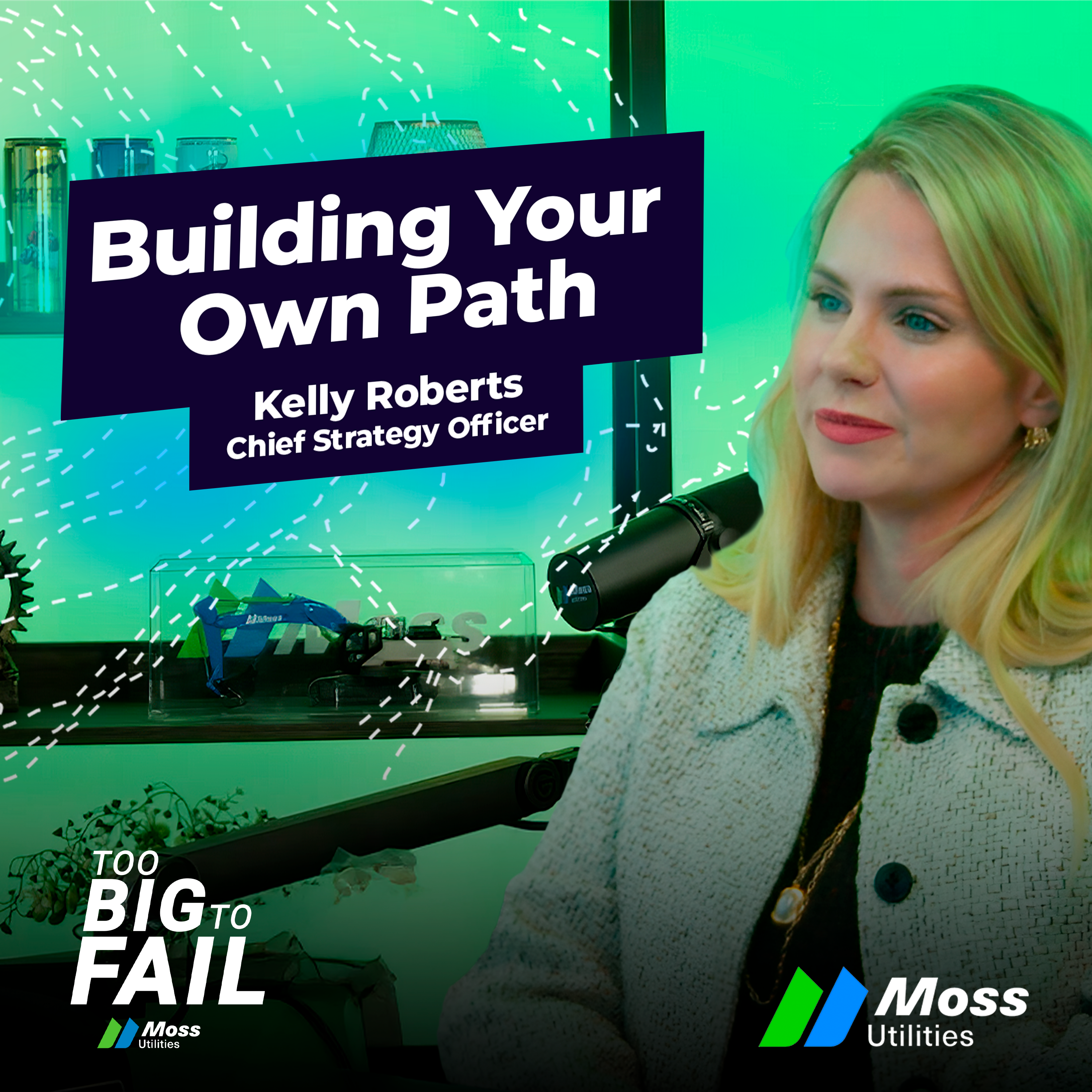
[00:00:58] Speaker B: Kelly, thank you for coming on today. Too Big to Fail.
I think one of the big names that, you know, a lot of people think of whenever they hear Moss Utilities is Kelly. Right.
You know, what are your thoughts, you know, when you hear Too Big to Fail?
[00:01:14] Speaker A: Well, I remember when we were first starting to think about podcasts and kind of playing around with names, and this is probably two or three years ago, I guess, and I remember Too Big to Fail. Well, first off, Too Big to Fail is. I think it's an HBO movie, but it's about companies that got paid out by the government, so there's that. So some people, when they hear Too Big to Fail, they think about that movie and they think about that. But when I hear Too Big to Fail, I think about building a company so large that you have so much responsibility around taking care of other people that it becomes too big to let it fail. And I think that that was the intention when Garrett first started thinking about the Too Big to Fail podcast. And I know John Moss kind of came up with that name, but I always think that that was their intention. It wasn't necessarily to say, hey, this company's too big now and we can't fail because of that. It was really about a sense of responsibility for taking care of the people that have built this company with him.
[00:02:12] Speaker B: Yeah. So in essence, Too Big to Fail. Right. It was like, there's too many people.
Too many people, too many lives that depend on us, you know, that we can't. We can't fail. We have to keep succeeding. Right, Right. So let's back up a little bit. You know, you started here at Moss back in what year?
[00:02:28] Speaker A: 2018. So I got here in February of 2018.
It's, you know, it's always, like, to tell this story about how I ended up coming here.
So Garrett and I worked together. We both worked at a company called Crawford Services, right. Right after college. So this is probably 2013, 2014.
And so Crawford had bought the company that I worked at in Fort Worth called. It was Air Ride. It was this little bitty mom and pop company.
And whenever Crawford bought that company, that company was in Fort Worth. They brought a few of us that were in the Fort Worth office over to the Dallas office. And so when I moved over to the Dallas office, it was just like a true construction feel. And there was this room called the war room. And in the war room, Gray, my husband, worked and Garrett worked, and there were a few other guys back there, but it was like a true construction war room. Like, there was no way I was walking in there, because who knew what they were talking about? But that's how we all first met. So that's where I met my husband. I met Garrett at the same time.
And Garrett ended up leaving, getting back into Utilities from there, because originally he didn't want to do that, but he got back into Utilities, and Gray ended up leaving and going to work for a different company. But I stayed at Crawford for, I guess I was there maybe six or seven years.
And eventually I just decided that I'd kind of hit my ceiling there. So I was, like, running a department, and I was part of the executive team, but I didn't see a path to the top there. And so I just kind of started kicking around what I was going to do next. And about that time, I was following Garrett on LinkedIn, and I was so blown away that he had already been so successful with Moss Utilities. And I just reached out to him one day and I was like, hey, if you ever need somebody, or, you know, maybe I'll just come by and talk to you guys. And he was like, yeah, come talk to us. So I went and I talked to him and Case, and we just had a great conversation about, you know, H vac companies, about his company. And he was like, hey, I have no idea what you're going to do here, but I want you to come.
[00:04:29] Speaker B: And so sounds like something he would say.
[00:04:30] Speaker A: Yeah, is true. Garrett Fashion.
So I got here, or I got to Moss Utilities. I quit my other job. And it was like a real sad thing to quit my other job because I was really part of the leadership team. And it definitely ruffled a few feathers, me leaving. And when I got to Moss Utilities that first day, he was like, hey, I don't know where you're going to sit, but why don't you just sit at the front desk? And I was like, okay. And then for the next, like, couple of weeks, I proceeded to not have anything to do that we were not very organized then. And so no one would give me anything to do. I would just sit at the front desk, like, thinking, oh, my God, this was the worst decision I've ever made in my entire life. Like, I can't believe I left the safety of this, like, really good job to come here and just kind of not have any direction. And so I'm sitting up there kind of twiddling my thumbs, honestly. And the CFO at the time was like, hey, we just implemented this new ERP spectrum. Can you just dig around and see what you can figure out about it? And so sitting at the front desk, never seeing a work in progress schedule before, I basically figured out how to get the work in progress schedule to work out of our erp, and that pretty much allowed me to then get to go do whatever I wanted with the company. Garrett was like, well, if you can figure this out and our CFO couldn't, what do you want to do here?
[00:05:48] Speaker B: And you built your own path.
[00:05:50] Speaker A: I built my own path. That's right. And so what was really fun about figuring out how to run the WIP for the first time is about a month after that, Garrett realized he was losing a ton of money because he had never had a working WIP before. And so if you know about construction accounting, basically what the WIP is, is it's a reflection of if you're under build or overbuilt on a project, and if you're just running an accounting system without a wip, then you have no way of knowing if you're actually making any money or not. Because over under billing takes money away from revenue, and that tell you if you're actually making any money. So once we had that report, Garrett was like, oh, my gosh. And so he actually, at that point, had to lay off some staff, and I ended up in an accounting role.
[00:06:27] Speaker B: Yeah, so they were essentially, they were blind to a couple of things that were pretty vital to Moss Utilities.
[00:06:33] Speaker A: Yeah, they were, you know, so I went into that accounting role. But that accounting role is. It's the role that Aubrey does now that is the hardest job, one of the hardest jobs in this entire building. It requires so much discipline and so much.
Just detail oriented. I hated it. I was terrible at it. It's like, not who I am as a person to be that detail oriented. And so I ended up managing projects after that.
[00:06:59] Speaker B: Awesome. Managing projects. What was one of your first projects?
[00:07:02] Speaker A: You remember Garages of Texas was. I did a garage as a Texas project.
I did Hub121 in McKinney, so. And that project was fun because now they've put all kinds of restaurants there. And there is a restaurant over there that we actually go to, MII Casino. And I'm like, I manage the project for the utilities on this. Oh, and the other one is actually Dr. Matt, our chiropractor. So his office is actually on a project that I did, too.
[00:07:27] Speaker B: Interesting, Interesting. So you're over here cutting up your food. You're like, I did this project.
[00:07:30] Speaker A: Yeah. I was like, yeah, I put the utilities in. I mean, I didn't do it myself, but managing projects was really good for just my overall foundation, because I know.
I know how to buy out a project. I know how people put the pipe in the ground. Julio Hernandez was super instrumental for me when he came on. He just kind of took me under his wing and was like, hey, you're not going to learn anything sitting in this office. Let's go out to the job site.
[00:07:55] Speaker B: Sounds like something you would say.
[00:07:56] Speaker A: Just, he taught me so much about utilities that, I mean, I. I think even in a town hall one time I called him out. It's just teaching me so much about what we actually do.
[00:08:08] Speaker B: Yeah. I mean, he's really big on it when it comes to, like, teaching and, like, you know, having a purpose. Right. Because like, even, like, now, like, moss U, like, I've seen Marcy go through it right now, and, like, she's learning so much from Julio because Julio's just such a good leader, right?
[00:08:23] Speaker A: Yeah.
[00:08:23] Speaker B: And he's about purpose.
[00:08:25] Speaker A: Right.
[00:08:26] Speaker B: What is the purpose of you being here and, like, what are you learning? Right. And that's kind of like what moss is about. Like, what is your purpose here and what are you learning? And how can you. Like, what part of MOSS utilities are you affecting? Right.
[00:08:37] Speaker A: Yeah. And I think that some people are just natural teachers.
Like, I'm not a natural teacher. Julio is. Because I think that he can see the bigger picture of, hey, I can either train this person or teach. Teach them what I know about this and everyone gets better. Or I can just focus on my own work. And I think that I honestly tend to be the type of person that gets stuck in the weeds and Will just kind of focus in on what I have in front of me. But Julio's a lot.
He can see the bigger picture, and so that's why he's able to be the leader that he is.
[00:09:04] Speaker B: Gotcha. Yeah. Did you, like, you know, so obviously you landed into the whole women in construction, right? Did you ever think that that was going to be, like, a challenge or obstacle to you being in construction?
[00:09:15] Speaker A: You know, I never, never ever imagined that I would put on a pair of boots and go out to a job site. Like, that was just not something I pictured myself doing, But I figured out that I could do it. I'll never forget one of my first.
Oh, gosh. What are they called? I can't even remember. My brain's foggy today. But what are they called when you go before the. Before you start the project?
[00:09:39] Speaker B: Like a pre con or.
[00:09:40] Speaker A: Yeah, it's like a pre con meeting. I feel like they're. I used to call it something, but handoff.
I remember I went to one and the developer was there, and Chad Cooley had just moved into the project management department. He was working for me, and I was trying to just teach him what I knew about it. So I've been managing projects for about a year. And I remember the developer, he was this old white guy, and he would not talk to me. He would not talk to me about the project. He kept trying to talk to Chad about the project. Like, he just. And I would be like, hey, I'm the project manager. You could talk to me about this.
Chad was like an apm. He was like, just helping me stay organized.
And it was just like one of those situations that you just have to bounce back from, and it was fine. But there were other projects that I had that I was able to talk to the developer, and it was no problem that I was a female project manager. So I think that that stereotype that it's so hard for women in construction, I think that that's coming to an end a little bit because I think that there are so many really strong females in construct construction. Like, I can just think of so many women that not only work in construction, but own companies. And so I just think that. That it's becoming easier, I think.
[00:10:52] Speaker B: Yeah, I think. I think you hit it, you know, spot on. Was, you know, there's a lot more women in construction. Right.
You know, like, Ms. April is a good example. Right. She never let you know, any obstacles or challenges get in her way to be where she's at now. Right. And. And if we get it can become difficult because sometimes the guys out on the field, it's like you said about the war room, right? You walk in, you never know what you're gonna hear. The field is a war field, you know? I mean, you never know what you're gonna hear. You never know what you're gonna see.
And it's just kind of like, did this really happen? You know, is this guy really telling me this? You know, and, you know, Ms. April's told me some stories about, you know, some. Some guys just, you know, saying some things that. Not necessarily bad, but you wouldn't say it to another male. You know what I mean? And so there's that, you know, and then owners, right? You know, you remind me a lot of my sister, right, because she's. She owns her own business, and she's very successful, and she was kind of like. Like our leader. She's like our executive. Right?
At least that's the way I see her.
And I think that's what a lot of people here at Moss, you know, see you as. As a leader, as, you know, a role model.
But I don't think there's enough people that know, like, right, we're at 500 employees, right? I don't think there's enough employees out in the field that know exactly, like, your impact to Moss Utilities and, you know, the direction that you have led it and to where we're at now.
[00:12:07] Speaker A: Right?
[00:12:07] Speaker B: And so, like, if you could give a message to, like, a crew, right, because they're the guys that are, like, you know, Sean said this. They're making the sausage, right? So they're putting the pipe in the ground. What would you tell them?
[00:12:20] Speaker A: What would I tell them? I think that a lot of people don't really know what a CFO does. I'm no longer the cfo. I've moved into chief strategy officer for the company. And I'll explain a little bit about that, but I think if I, you know, had to explain my impact on Moss Utilities is. I think that I just stayed with Garrett when a lot of people left.
So let's go back to 2020, and I think a lot of people have heard this story, but it's a pretty impactful story.
So in 2020, I'd moved from managing projects back into the accounting department because we had had some turnover, and it's just where I needed to be.
And I was working under the CFO at that time, and we.
I remember going back into accounting and pulling Garrett and Case into my office and just start and just crying Because I didn't realize a financial situation we were in.
It was to the point that nobody was willing to pay us, just a regular check. Everything was a joint check, which means that everything was written to both us and Ferguson. And so basically all of the money that was coming in from projects was just going directly out to the pipe suppliers. So we were in a really tight financial situation.
And when I first got back in, I just cried. Like, I, you know, I remember multiple lunches where we were all sitting around saying, well, what the hell do we do now? Like, where do we go get a job? I mean, this is me, Garrett, Kate. This is all of us. Like, we did not.
There was a point where we didn't really see a future.
And about that time, the CFO at the time, who's a good friend of ours still, he just looked at the situation and said, hey, Garrett, I'm sorry, but I think you should file bankruptcy. And I quit.
And he was like, who do you want me to teach how to do the bank reconciliation? And Garrett was like, well, Kelly, of course. Like, you know, she's going to. She's going to be here with me. Train Kelly.
And so that was two weeks before COVID And so, you know, I just kind of inherit this terrible financial situation that we have no idea how we're going to get out of. And Covid happens and then we're like, oh my God, the world's coming to an end. Like, this is really not going well.
And we were out for two weeks working from home, and, you know, we get back to the office and then all of a sudden there was this thing called ppp.
And that was basically the government's way of saying, hey, businesses, let me give you a hand. And if you are, if you're retaining employees and continuing to pay employees during this time, we are going to help you with that. And so the PPP was a way for the government to help with payroll. And so we applied for our first PPP loan and we got it. And it was just very impactful for us. It was almost $2 million, and we were able to subsidize payroll for eight weeks.
And that just gave us. That gave us a foothold.
Then next came the Eidl loan. And the Eidl loan gave us a little bit more of a foothold, which was another government sponsored way of helping businesses.
And, you know, at this time, construction's just going, we're starting to get more work and we're starting to be more profitable. And during this time, we hired an Interim CFO Rick Marino. He was the CFO here for a very short time last year, and he made it his responsibility to teach me everything he knew about what it meant to be a cfo. And so I was spending eight hours a week with him. And then we were just trying to make good decisions in the business. And around that time, we got partnered with Texas Security bank, who ended up just being a lifeline for us. So they came in and before we were really bankable.
And what that means is, so a lot of people start businesses, good luck getting a bank to give you money, because most banks are going to look at your financials and they're going to say, I'm not going to touch that yet. It's too risky. And so that's kind of where we were at. Banks didn't really want to talk to us. They kind of laughed at us when we showed them our financials. It was not a good place to be. But Texas Security came in and they said, hey, I see something here. I see something in you, Garrett.
Let's. Let's figure this out. And so they kind of got really creative about how they structured some debt for us. And it was life changing. And, you know, we made it through 2020. We made it through 2021. At the end of 2021, we were in a much better place. And I'd been trying to convince Garrett to do something called Traction for a long time. It was a book that I. That I had seen implemented at Crawford Services, and I just thought it was going to be really impactful to the company.
And so Traction, which is that book right there, is basically an entrepreneurial operating system. It's a way for people who've never run a business to understand how you run a business. And it's basically just a platform for doing that. And one of the most important things that came out of Traction in those early Traction sessions was we built a vision for the company, and we built core values for the company. And we, you know, put this crazy, they call it big, hairy, audacious goals. And we put this goal up on the wall that we were going to do 250 million in 10 years. You know, none of us really believed it at the time, but we were like, what are we doing here? What are we aiming for? We were like, that's it. You know, we built this executive team. And that executive team looks very different today than it did then, but it gave us a way to start measuring our goals and a way for us to start figuring out where we were going As a company and, you know, the rest is kind of history. We lost a. We lost some field people, we gained some really good field people.
Parker got to step into a role that was hugely beneficial to the company.
And in the meantime, on the back end, I was just managing vendor relationships, I was managing banking relationships, I was managing the people that were going to be able to help us get to the next place.
And we managed to get it all figured out. And it's so funny, I remember the first time that banks started like knocking on our door and being like, hey, you know, we want to be a part of this. And I was like, man, we remember when banks used to not give us the time of day. And now, you know, a banker will show up at this building at least once a week wanting to know what it is Moss Utilities do is doing.
So that's, that's pretty much in a nutshell, what I did for, for Moss.
[00:18:23] Speaker B: That'S like, you know, I've heard a lot of short stories about that. Big story, right. It's kind of like, you know, people not wanting to help. Right. Or the, the situations that Moss Utilities was in. Right. I think one that, like, I've heard a lot was like ubt, right? The relationship that Chris Dunn has with Moss Utilities.
[00:18:45] Speaker A: Right.
[00:18:45] Speaker B: I think there were the ones that kind of, you know, never, you know, let us down when it came to like, hey, we need, we need more trench boxes, we need more stuff. And they just kind of kept that door open for us, which is why we still have a great relationship, you know, to this day. Right.
[00:19:00] Speaker A: Bay machinery, Underground products of Texas. Those are all guys that I just. Those guys helped us when nobody else would.
I mean, I remember those early deals and I remember how much money we owed them at that time. And I will also say that though those two vendors are part of the reason we stand here today.
I just think that. And that's why, you know, when we came up with that core value, we wanted it to be a win win. That's when you make a business decision, you really want it to benefit the vendor, you want it to benefit the company, you want it to be beneficial to everybody because you never win in a zero sum game. And so that's why I was so forceful of that core value. And I think that that core value has really gotten us really far because we've built this relation, these relationships in the market where we can buy better, we can, you know, other, other companies don't have these relationships. And I think that that's really been a Differentiator for us.
[00:19:57] Speaker B: Yeah, absolutely. And I think that's what the field, you know, didn't get to see, or a lot of the new guys that are here now. They. They didn't see that. Right. I personally did not see that.
[00:20:05] Speaker A: Right.
[00:20:05] Speaker B: I came, you know, to most utilities when it was already, you know, on the up path of things. Right. And so I think that's very impactful for the guys to know out in the field because it took some sacrifice. Right. It took some, you know, willingness to keep going. Right. Because if it was anybody else, they probably just gave up. Right. Who knows what another owner would have done or another executive team would have done. Just probably give up, you know, I.
[00:20:30] Speaker A: Think that that's a true.
I mean, it's a true testimony to Garrett, because Garrett is the ultimate entrepreneur. And what I mean by that is he's a little crazy. Like, he can see a glass half full when no one else in the room thinks that there's anything worth salvaging. He will have, I think, if you did a strengthsfinder on Gary, Positivity's probably high on his strengths because I can give him the worst news in the world, and he'll find the one piece of that news that doesn't suck, and that's all he'll hear.
And that is the reason that we're all still here today, because I was really just following him. Like, if he. If he saw the path, I said, okay, I'll follow you. You know, if you see it, I don't see it, but I'll follow you. And that's. That's really why we're all here. I mean, there's a lot of people that help build this company, but without him just being kind of fucking crazy and seeing something that nobody else saw, nobody else would be here today.
[00:21:27] Speaker B: He's definitely an intimidating guy, Right. I think. And not in a negative way. It's more like a respect kind of thing, at least for me, personally. It's like, I see him and I'm like, this dude created this, you know?
[00:21:39] Speaker A: Well, yeah, he's larger than life now, for sure. I mean, he's only a year older than I am, and he. He built all this from scratch. And I don't ever want to take away from the fact that there's been so many people in the background helping build this, you know, Parker, Julio, even me. And, you know, everybody had a different piece to play to get us here, but none of it would have happened without Garrett.
[00:22:03] Speaker B: Yeah. And I think one of my favorite things about him Is like his, like how giving he is, right? Because like, I've been to other companies and you know, they'll give you. They'll give you a little cup here and there and, you know, they'll buy you a sandwich here and there, but not Moss Utilities, not Garrett. Garrett's not about that. He doesn't want your. Your sports authority shirt. You know, he wants to give you a snaps, you know what I mean? And that's a big example of who he is. Like, that's, you know, this field appreciation day that we had, you know, he pushed for that. He was like, we want to do this, we want to do that. And that just shows, you know, his dedication to the guys out on the field. And, you know, they're the. They're the guys. You know what I mean?
[00:22:44] Speaker A: Yeah. Moss Utility is definitely rooted in generosity.
I think it was about.
It's kind of like that idea of if you build it, they will come. That was really always the story of Moss Utilities. I remember when, I remember even hearing GC say this, that, yeah, I don't think they're making any money, but they sure have nice trucks. That was when everybody had these great big jacked up trucks. And like, I remember when the Ally bill would come every month and I was just like, oh, my God, we. We cannot afford these trucks. And. But Garrett would spend money on things that other people wouldn't have, like marketing, like, you know, a lot. Like, there's another competitor of ours, North Texas. And I'm definitely not throwing any shade on North Texas because it's a extremely successful business. That's our biggest competitor. They're bigger than we are. They're, you know, they're great company, but I couldn't pick out their logo. If I had. If somebody put a gun to my head and said, pick out their logo, I couldn't do it.
But I guarantee you that just about anybody else in the construction industry knows the Moss Utilities logo. And that's because it was put out there way before we had the money to put it out there.
The brand is just so strong and kind of in line with that idea.
You know, Garrett pays people really well. He paid people, you know, he'll go and hire people well before there's a need to hire that person. And it's really, you know, the success of Monster Utility is really a reflection of having the right people on the bus.
Like, Garrett knew where the bus was going. He just had to get the right people on the bus. And once he did, it was. We were kind of Off.
[00:24:20] Speaker B: So, yeah, that's, that's an interesting way to put it. Right. It's like having the bus but not having the right people to do it. Right. And that's what we continue to do is try to find the right people to keep growing to the 250. Right.
[00:24:35] Speaker A: Here's what I think people do, business owners do. I think that every month they're so focused on what are they going to get out of it that, you know, they're looking at their financials and they're saying, well, you know, I could pay this guy $100,000 and he could do the job of this guy. Now he's not going to do as good of a job as this guy that I'm going to pay 150, but he'll do an okay job. But the problem is that guy is going to come in, he's going to do his job, he's not going to do anything else.
The right person may cost more, but they are going to have such a major impact on your organization that all of a sudden you're going to look up and you know, what used to be a major line item on the, on the P and L, you know, job supervision, it's a drop in the bucket because those people were able to move the company so forward so much.
[00:25:23] Speaker B: A lot more impactful than the hundred thousand dollars.
[00:25:25] Speaker A: Yeah, I mean, you know, I think people get lost in this idea that, oh, that's 50,000, that's $50,000 I could take to the bottom line.
Don't be so small minded.
That $50,000 might bring in two, three, four million dollars of work.
But it's kind of all in people's perception.
[00:25:43] Speaker B: I think despite all those obstacles, challenges, you know, I think that's kind of like the big picture, what you're saying. And that's what, you know, I think one thing that the fields can take out of this, you know, too big to fail, is like at the end of the day, all of these, you know, challenges that Moss went through, all these obstacles and, you know, they were able to strive and it impacted the guys out in the field. At the end of the day, you know, if it wasn't for all that stuff that were, you know, you guys were going through, you know, the guys would not be, you know what, I think we're like 50 crews deep now. 60 crews, 500 employees. Like, it's, it's, it's huge. Like to think about it like these are, you know what Parker says, right?
500 lives depending on us.
[00:26:29] Speaker A: Yeah, right.
[00:26:30] Speaker B: That's his thing, right?
[00:26:32] Speaker A: Yeah. And I think that that's why when Garrett started looking at an opportunity for not necessarily an exit strategy, but just an opportunity to kind of give back, you know, he had all of these people that, you know, anybody with a whole lot of money would love to own Moss Utilities.
And I think Garrett had a. Garrett had a lot of opportunity in front of him to do what he wanted with the company last year when he decided to do the esop. And that was one of the things that got to be a part of was the ESOP transaction. So I was basically the main person that guided that transaction. I worked with all of the different bankers, attorneys.
There's a lot of suits, a lot of suits I worked with, and it took about eight months to do it. But Garrett was very steadfast on the idea that he wanted to have employee owners. He wanted to give back to this company what this company had given to him.
And, you know, I don't know how many bankers we had come in and how many smart people and that came in and just told him he was stupid. Hey, this isn't the, this isn't the right choice for you. This isn't the most taxable choice for you. This isn't the right choice. You know, you could be. It'd be so beneficial for you to pick a different option. And he was like, no, I'm picking the option that gives back to the employees. And I think that as a field employee who's out there right now working for Moss Utilities, the ESOP really doesn't mean anything.
But for the field employee who's out there right now, who's also going to be there 10 years from now, it's going to mean a lot because they're going to look up and they're going to get the statement and it's. And I'm not, I don't ever want to tell anybody that one day they're going to get a million dollar statement in the mail. That's not what this is. But what it is is a way for everyone that works here to have retirement money put up for them.
All they have to do is come in and try to make this company better than it was the day before. And that money's going to up for them. And I can't think of a better way to give back to the employees than to do that. And I, like, I really can't highlight enough how many people told him not to do this, that there was. So there were such better ways and more profitable ways for him to do it. And he was just so steadfast, and this is what he was going to do because he, I think, recognizes that he didn't build this company alone and that so many people were going to benefit from this.
[00:28:55] Speaker B: Yeah, I think that's a big message to go out to the field, is that, you know, not only will he benefit, but the field is going to benefit. And that's what the big picture for him was. Right? Is the field benefiting?
[00:29:07] Speaker A: Yeah, the field benefiting. The. The office, people benefiting everyone that works at Moss Utilities, you know, and I feel like that's what makes it more of a family feeling, is it's like, hey, we're all in this together. Like, this is not just a day job. Like, there's a lot of day jobs out there, and people are welcome to go try any of them.
Moss Utilities, not a day job. Moss Utilities is a family, and it's a place that you come to work where your contributions matter and what you contribute is going to have an impact.
[00:29:36] Speaker B: Let's. Let's talk a little bit about from CFO to chief strategy officer and, you know, other roles that you're having to do over heating and cooling.
[00:29:44] Speaker A: Yeah, Chief Strategy officer. So it sounds made up, and that's because it kind of is. So one night, you know, I just sat down with Garrett one day and I was like, okay, I'm moving out of the CFO role because I'm going to go run heating and cooling as the CEO. That company's gotten really big now. We're up to 70 employees over there, and it's something that I needed to focus on full time. I'm a partner with Garrett in that company, so it was time for me to go and do that. And that means that we had to replace my role as cfo. But I kind of bleed Moss Utilities. Like, it's what I think about when I'm going to sleep at night. I love this company. I feel like I've had.
I feel like I've grown up with this company. And, you know, me and Garrett sit down, we said, there's no way that I can just walk away from this company completely. Like, I have too much. I have too much knowledge of the inner workings of it. And I was like, I just. I would never be able to just truly walk away. And he was like, okay, well, what. How can you. Where do you want to contribute to this company? And I was like, well, strategy. That's, you know, if I did a strengthsfinder, strategic thinking is highest on my strengths I want to be able to help guide this company in a way where I'm not bogged down, like in a CFO role. And a CFO role requires a lot of head down work. And so chief strategy officer, what that means is that I'm going to kind of, I'm guiding the executive team. So in every executive meeting, I lead the meeting and we work through traction, we set goals for the future.
When somebody comes up with a goal, we sit down, we say, okay, how are we going to attain that goal? So that's my responsibility. When Ruben actually brought up in the meeting and I was gonna talk, I was just had some other stuff on my mind that day. But Ruben was like, well, when are we gonna set more goals? Great.
That's important, Ruben. And in fact, whenever we hit our third year goals, I was the one that said, hey, maybe we didn't, maybe we didn't try hard enough with our goals if we're already hitting our third year goal, we weren't aggressive enough. And of course Parker wasn't very happy with me for saying that, but that's, but I was like, let's, if we can do this then we could have done that, right?
So that's my focus, is I help set goals for the company. I help decide if things are a worthwhile venture for us.
I'm also managing the HR department and I wanted to do a lot of fun stuff with that. And so one of the things that I really wanted to guide is how do we hire and recruit better? And so in one of our meetings, we dreamed up the idea of having a talent acquisition manager. We went out and we found him super excited for him to start later this month.
The other thing I really wanted to do is I want to do a better job from the office perspective of how we promote and how we place employees in different roles. I think a lot of times if people aren't a good fit in a role, sometimes we'll just kind of try them out in different roles until something fits. But I think that there's a more strategic way to go about that. And so I'm going to implement something called Culture Index. And so Culture Index is going to help us get a better beat on people. And if they're going to be right for roles before we just kind of dump them in those roles. And so not only is it going to be an internal promotion tool, it's also going to be a way for us to hire better.
The other thing I'm really interested in doing and I want to get going is a mentorship program. I think as the company continues to grow, we're going to see a true need for people to have mentors in other departments. Like, I would absolutely love to be the mentor for a young woman that's recently, you know, been brought in, in the PM department and just kind of be a liaison for that person. And what are you going through? Here's what I went through. I think that there's probably not anything more impactful than having a mentor in a company that can, you know, that's kind of outside of your department, that can help you grow.
So those are kind of some of the things we're focused on. We're focused on hiring better, recruiting better.
And you know, it's, I think that it's always important to say, hey, it's, it's great that we got to 500 employees. It's great that we got to this revenue number. But what got us to here won't get us to there. And so we always have to go back to the drawing board and figure out what's next for the company and how are we going to get there.
[00:33:53] Speaker B: Big strategy there, big strategy plan. So whenever you mentioned the like, talent acquisition manager, right. Is that something that, like, not only in the office, it's going to be impactful, but like the field?
[00:34:05] Speaker A: 100%. It's 100% for the field. You know, right now we don't have a good way to kind of recruit people in the field on our own. And people would come in and they drop off resumes or they'd fill out applications and those applications would just kind of get put in a drawer. And nobody was really managing this process.
And it was really just, you know, we've always been. And I think it's because we have such a strong reputation. It was always so easy for us to get more talent and get more people coming in the door. And I think that as a whole, it's just going to be a little bit harder to do that moving forward. And so, you know, it's kind of again, that idea of what got us to here won't get us to there. We, we need someone in this building that's full, full time focused on recruiting. And that means field talent, that means office talent. We should be able to, as an organization, say, hey, I. Right now I'm bidding a project that's $50 million. That would be a really big project for us. But let's say that one day we get to a point where we, we say we're gonna bid, we're Gonna bid a $50 million project, and we think that project's gonna hit in February.
I would want somebody like Parker to be able to go to a recruiting manager and say, I'm gonna need 45 or I'm gonna need 50 more people for this project starting, you know, February 1st. And that instead of it being Parker's job and the superintendent's job to kind of go and find that help, let them focus on what they're doing, which is running the field and running projects, and allow somebody else to be fully focused on staff.
[00:35:39] Speaker B: That completely makes sense. And you can even, you know, hit it towards, like, you know, that $50 million project is going to need additional personnel, not just, you know, your crew. You know, it may need another loop truck driver.
[00:35:50] Speaker A: It may need another PM another safety person.
[00:35:53] Speaker B: Exactly.
[00:35:53] Speaker A: 100%. It's not.
That's why it's not just. Yes. Like, right now, Parker could go and find whoever he needed for the field, but it's so much bigger than that. Right. Because there's all these other roles that are going to be necessary for that. And we want to get to a place where at the end of the year, we say, hey, next year we think we're going to do. We're going to do 250 million or we're going to do X amount. It's like, what is that going to look like from a personnel standpoint? What if we had a plan from the very beginning of exactly how to get there? That's the kind of strategy that we're looking to build.
[00:36:26] Speaker B: Strategy. Well, thank you so much. I appreciate you coming in and, you know, giving us your big picture on Too big to fill. Right. I think it's necessary to be said and heard out in the field, and I think the guys are, you know, really going to appreciate you and, you know, your vision for Moss Utilities as you continue to be part of Moss Utilities. Right. I think it means a lot, the fact that you say you believed Moss Utilities. Right.
Because that's what kind of what we want the guys to do is bleed Moss Utilities, you know, every time they come to work. So. Thank you.
[00:36:57] Speaker A: Thanks for having me.