Episode Transcript
[00:00:00] Speaker A: And that that job was tough because it was a bunch of rock. I mean, we did, you know, it was. The whole job was pretty much rock.
[00:00:07] Speaker B: Take twice as long.
[00:00:09] Speaker A: Take twice as long. And I think we actually, you know, beat the schedule on that one as well.
[00:00:13] Speaker B: Yeah. And hopefully we didn't break too many teeth.
[00:00:16] Speaker A: Oh, we did.
[00:00:19] Speaker B: I know. I know Jonathan would be happy about that.
[00:00:21] Speaker A: Yeah.
[00:00:38] Speaker B: Well, Giovanni, thank you for coming on today.
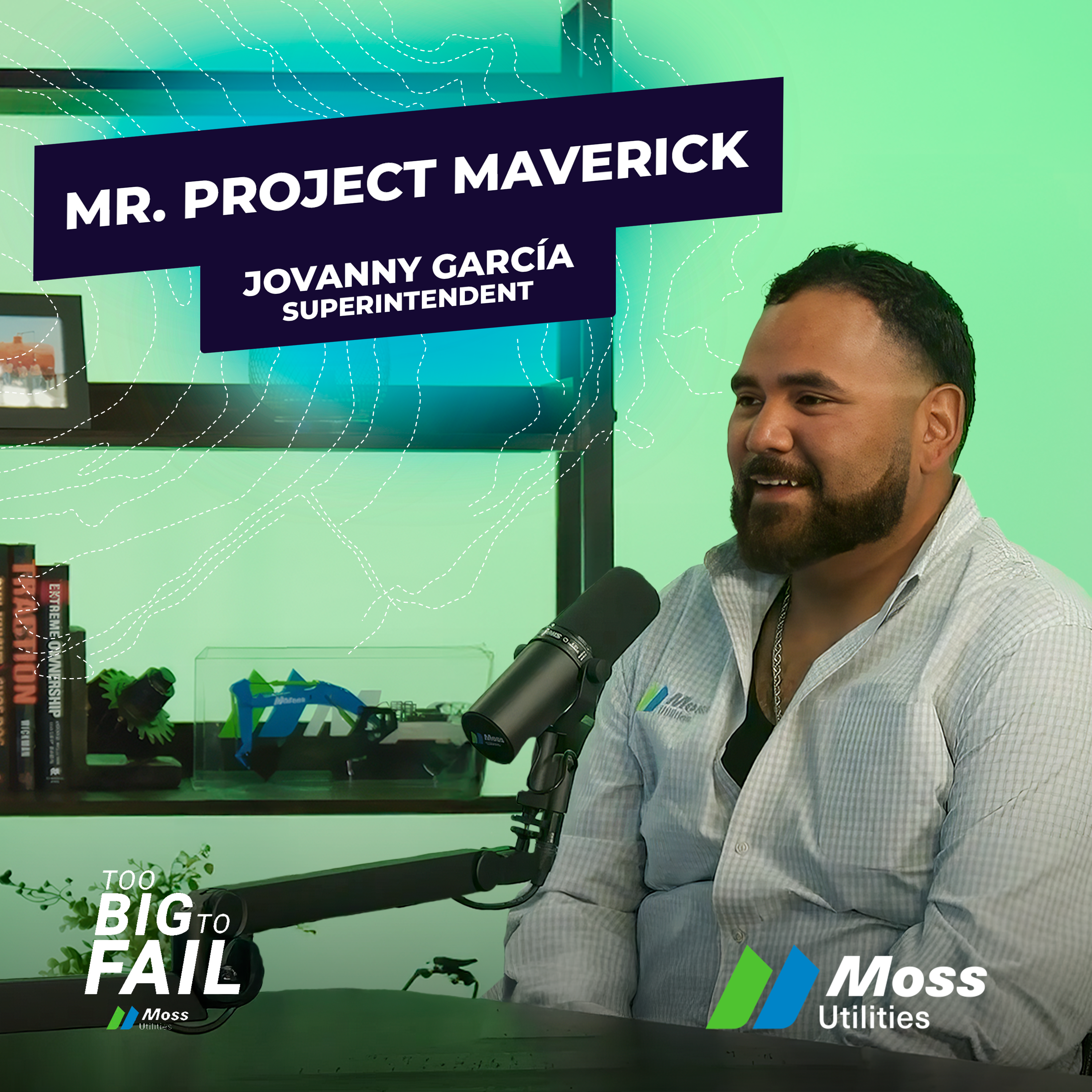
Too big to fail, you know. And one of the first names that came up was Giovanni Garcia. Right.
You know, my first week or so here, I spent it with you. It was a little interesting, but I liked it. And the reason I liked it is because I saw, you know, a little bit more of the way the superintendents dealt with the foreman, so on and so forth. Right. But tell us a little bit about you. You know, how did you get started into construction?
[00:01:11] Speaker A: I mean, I started. I started pretty young. I started working when I was 14. 14 years old, every summer.
Worked for a couple of summers with my dad and.
And then graduated high school and got back at the same type of trade. I mean, utilities.
[00:01:30] Speaker B: Yeah. So it was as when you were 14 doing utility work.
[00:01:34] Speaker A: Yeah.
[00:01:34] Speaker B: Wow, that's interesting. Years old, same thing. Like what we're doing now, or is it. Was it smaller?
[00:01:41] Speaker A: Same thing.
[00:01:41] Speaker B: Same thing.
[00:01:42] Speaker A: Yeah.
[00:01:42] Speaker B: They just had you as a laborer?
[00:01:44] Speaker A: I started as a laborer and then I would work every summer. Every. Wasn't like I started at 14 full time. Now it was just. Just summer vacation and then I'll go back to school.
[00:01:55] Speaker B: Yeah.
[00:01:56] Speaker A: Then I graduated, and once I graduated, I came back to work. Same company.
[00:02:02] Speaker B: So were you a labor all those years that you were like, before you started, and then as soon as you graduated, did you start off as, like a pipelayer helper or you still.
[00:02:10] Speaker A: No, I started as a laborer again.
[00:02:11] Speaker B: I started as a labor again. No. How'd you like it? Why did you. What made you want to keep going back?
[00:02:17] Speaker A: At first I didn't like it.
[00:02:18] Speaker B: You didn't like it in the summer? Like the money?
[00:02:20] Speaker A: The summers were tough.
[00:02:21] Speaker B: Yeah.
[00:02:22] Speaker A: I mean, I remember my dad used to tell me, hey, you know, if you don't want to work, I mean, you're probably gonna be better off painting nails or cutting hair or something, you know?
But, I mean, Hispanic, I feel like.
[00:02:40] Speaker B: Hispanic dads can be a little. Little rough sometimes.
[00:02:42] Speaker A: Yeah.
[00:02:43] Speaker B: But I think it's for the good, right? They want the best for us.
At the end of the day, you know, it's kind of like what I said is, you Know, I didn't want to go into, like, fast food. I didn't want to go work at a grocery store or something, you know. Yeah, but, yeah, I mean, it's. It's, you know, I didn't want to work in construction either. I just. It was kind of like I. I needed a job too. Right.
So labor, pipe layer, you know, how long were you. What did it take before you came in? Pipeliner.
[00:03:12] Speaker A: I mean, for me to. I was never a pipe layer man. So throughout the whole year of time that I was working in the ground, I was a laborer. You know, they had me running, you know, doing pipe layer work, but I was never physically. My title never changed from a pipe layer.
[00:03:30] Speaker B: So you're always. Your title was the labor, but you're doing everything else.
[00:03:32] Speaker A: Yeah, I was doing everything else.
And then once I, you know, started getting more the hang of it, I went from being a laborer to a backfield operator. And I was already kind of running machines here and there, loaders. So I went. I got on a machine and I was, you know, helping on backfill. I was a. I was a loader operator as well.
And then a little bit of track. Oh, I was digging main lines and stuff. Not nothing, but I think throughout the whole.
I was probably a labor for about three to four years.
[00:04:05] Speaker B: Doing all those rows, essentially.
[00:04:07] Speaker A: Yeah.
[00:04:08] Speaker B: Working under your dad still?
[00:04:09] Speaker A: No. Whoa. No, it was. I worked for my dad for about a year, year and a half, and then after that, I mean, I went split apart and went my own way.
[00:04:19] Speaker B: Yeah.
So, you know, what was the transition from you, you know, working on a crew to, like a foreman or did you, you know, ever become a foreman or how did that happen?
[00:04:32] Speaker A: Yeah, so I became a foreman.
So they had me pretty much helping out my. My foreman at the time because his English wasn't too good. And.
And he started green as well. And as I helped him, I kind of learned as well, so it kind of benefited me as well. And, you know, one time, our boss at the time, he came by, he was like, hey, you know, you've been helping out a lot, and yada, yada, yada.
And he just told me one day, he was like, hey, I'm gonna make you a foreman. And I became a foreman.
[00:05:09] Speaker B: Yeah.
[00:05:09] Speaker A: I was probably 22 years old when.
[00:05:12] Speaker B: You became a foreman.
[00:05:13] Speaker A: I became a foreman, yeah.
[00:05:14] Speaker B: Yeah. I feel like that's a. Like a big trend out in the field even nowadays is, you know, they usually have that guy that knows, like, you know, very good English, you know, these Foreigners know English, right? But, you know, there's. There's some that still stronger or a little timid to speak in English, a little embarrassed about their accent or whatever, you know. But that trend of, you know, there's always that guy that helps out the foreman to, like, communicate in English with, whether it's a GC or a city inspector or whatever. I think that's, It's. It's very common nowadays that. That happens. So you're a foreman, right? To give you crew. How'd you feel about being a foreman? Did you like it or off the top?
[00:05:54] Speaker A: I mean, I had a tough boss man whenever I became a foreman. He. He was pretty tough on us, on everybody. Right? Yeah, at first I was, you know, let's try it out. And then once I was actually a foreman, I was like, man, I kind of regret it a little bit because now you have more responsibility. And it was just. He was. He was a heartache, man.
But he was hard as well. But he also told me, you know, hey, this is for your better. I mean, you're either gonna stick to this or you're always gonna be working in the ground. And, yeah, no, I didn't give up. So I kept going and kept going, man. And, you know, throughout the years, I mean, eventually I became a super.
[00:06:33] Speaker B: Eventually came super at that same company or you already became a super different company.
[00:06:37] Speaker A: No, I became a super here. So whenever I got hired on here, I was a foreman over there, and they pretty much had me running two.
[00:06:45] Speaker B: Three crews as a foreman over there.
[00:06:47] Speaker A: As a foreman over there. So, you know, it wasn't really hard to transition from being a foreman to super. And, and plus over there, I mean, it was, you know, the foreman did all. I mean, you talk to the inspectors, you send emails, you coordinate. So it was a different process. Right. So it wasn't as hard to transition from being a foreman to a super for me, because I was already doing a lot of it.
[00:07:12] Speaker B: A lot of the super role title. Right. So it's kind of like you were saying, you know, when you first started off, you were a labor. You were doing all the roles. Right. So now you're a foreman and you're doing all these roles that kind of led up to being a superintendent.
[00:07:25] Speaker A: Correct.
[00:07:26] Speaker B: So, you know, superintendent. What year did you start here at Moss? You remember?
[00:07:30] Speaker A: I think it was 21. 20. 21, yeah.
[00:07:35] Speaker B: What were your initial thoughts? You know, like, this is. It's a new company or company.
[00:07:39] Speaker A: So whenever I.
I talked to Parker about coming over here, he was like, hey, man, you know, they offered me a job and I came, interviewed with them and we talked, we discussed and, you know, we.
We shook hands and, you know, I told him that I was going to come over here with them.
And at that time, they didn't have a, you know, good reputation. You know, I mean, they're.
How do you say it?
Where I was working at, they were. I guess since they were competitors, they would talk a lot of, you know, talk down on Moss and saying, hey.
[00:08:16] Speaker B: That friendly competition, right?
[00:08:17] Speaker A: Yeah, that friendly competition, you know, that, hey, you're gonna go over there and that company is going to close within a year and, yeah, yada. And they'll make up a lot of stuff and.
But I mean, my dad has always told me, hey, if you give your word that you're gonna. If you already interviewed and you already told him you're gonna come, you gotta stick to it.
[00:08:37] Speaker B: Yeah. Man of your word, right?
[00:08:39] Speaker A: Man of your word.
[00:08:39] Speaker B: Yeah, yeah.
[00:08:40] Speaker A: So, I mean, I came and I mean, every. I mean, I've been here.
[00:08:45] Speaker B: So did you already know Parker or how did you.
[00:08:48] Speaker A: No. So there was a guy here that used to work. His name's.
He was in the estimating side and he's the one who kind of introduced me to Parker and Garrett and. Yeah, the guys here.
[00:09:00] Speaker B: It's always about connections, man. It's always about connections.
Well, you made the change. Started over here.
How many crews did you start off with? Because I know now, like all the supers have.
It varies from, you know, depending on the projects too. Right. But like, how many crews did you start off with?
[00:09:18] Speaker A: I mean, it wasn't really starting off with, you know, how many crews they were going to give me whenever I got hired on. It was more of a, you know, you're gonna help us out for now, but start gathering people. You know, we need crews. So I think I brought maybe like one or two crews at.
Whenever I came in and, you know, I helped out on other superintendents here with stuff they had lingering or. Yeah, you know, stuff they needed help on.
[00:09:45] Speaker B: Just help out wherever you could.
[00:09:47] Speaker A: Help out wherever I could, yes.
[00:09:48] Speaker B: What was one of your first projects? You remember?
[00:09:50] Speaker A: One of my first projects here with Moss was I helped another superintendent take over a job in Grand Prairie. Was a villa, traditions, and it wasn't too good, but we made it through.
[00:10:05] Speaker B: Yeah.
[00:10:05] Speaker A: And then from there, I mean, just started getting smaller projects and bigger projects. Started off with small, small and then big eventually.
[00:10:15] Speaker B: But yeah.
[00:10:16] Speaker A: Yeah.
[00:10:17] Speaker B: What are like. So you've done a lot of projects up to now, right? It's been a couple years since you first started. Is there any projects that you say, like, you know, like, this is. This was a big project. Like, you know, I learned a lot from it. Or, you know, all projects have headaches, right? I don't think there's a perfect project. Was there, like, a project where, like, you know, this one was challenging, but we made it through.
[00:10:40] Speaker A: Yeah, I mean, there's. I mean, there's been. I mean, every project is different, man. Some projects, they, you know, you.
You mean, you do pretty good, and you also learn from those projects. You know, you. You. You did good, and you try to take the same thing to.
And then there's some projects, I mean, that, you know, you. Sometimes you start off with the left foot, and, you know, we try to even it out. I think one project that I remember was probably Trinity.
It was in Fort Worth. It was a warehouse with Micah.
And, I mean, ever since we started that job, I mean, we started, the job was pretty simple, but it turned out. It turned out a nightmare, man.
[00:11:25] Speaker B: Yeah. I mean, like I said, I don't think there's any project that's perfect, right? But it takes a leader to finish out those projects, right? Because it's easy to just give up, right? It's easy to give up, you know, but someone like you always wants to keep, you know, pushing, keep pushing, keep pushing, finish off the projects.
You know? What. What's been your. Your relationship with other supers here? I mean, I say you get along with all of them, right? You know, they're good guys. You always. From what I hear, you're always helping out, wanting to help them out, you know, team player. You know, it's a relationship with them.
[00:11:58] Speaker A: So we have. I mean, I have pretty good relationship with pretty much every super. I mean, all the supers out here now. I mean.
I mean, helping out is just a thing that comes naturally for me. I mean, I just mean ever since I was little, I mean, I've always been wanting to help out people, others and stuff like that, and as a super helping other supers, I mean, it's. It's also.
[00:12:25] Speaker B: It feels good.
[00:12:26] Speaker A: It feels good.
[00:12:27] Speaker B: Yeah, it feels good.
[00:12:28] Speaker A: I mean, I remember when I was trying to grow up in the company, I mean, there was other Foremans. Whenever I became a foreman, there was other Foremans that would try to bring you down, man, with negative comments, saying, hey, Estebato, Nova Dorari, stuff like that. But that's something I always seen that I didn't like. And now that I see that, you know, you have a young guy coming up and a younger guy. Right.
Coming up. And in the superintendent world, I mean, my first thought, you know, let's help him out. I mean, I wish somebody would have helped me out.
[00:13:03] Speaker B: Yeah.
[00:13:04] Speaker A: And it's just something I like doing.
[00:13:08] Speaker B: Yeah. That's kind of, you know, what I've seen as, you know, like, one of the guys that, like, the newer guys, maybe they've been doing the work for a while is like, Alejandro, right.
Alejandro's new to this, but, you know, he's. He's. He's out there, man. He's out there, and I'm sure he'll. He has 21 questions, but it's. It's for the better, right? To, you know, there's no stupid question, right? There's no stupid question.
But that says a lot from you. It says a lot from Moss, right? To, you know, you've grown. We've grown, you know, as a company, you know. You know, we're here now today, right? And that. That says a lot.
You know, there's. There's a lot of things that Moss does for its employees, and, you know, it's. It shows out in the field, right? Shows on the field. And I think you're a good example of, you know, what Moss is about. Right. And its culture.
It's one of your favorite things about here.
[00:14:03] Speaker A: I mean, the. Like you said, the culture. I mean, there's just.
I mean, there's. There's a lot of things that Every company has its goods and it's bad, right? I mean, this company, I think.
I mean, ever since I came here, man, I mean, they listen to you. I mean, this is one of the things that I. I like, you know, if you have an opinion, they hear you out and, you know, they talk about it.
[00:14:28] Speaker B: Yeah.
[00:14:29] Speaker A: I mean, there's others company that, you know, they.
You just a number.
[00:14:35] Speaker B: There's just a number. Yeah. That's a common trend around here, is that, you know, you know, sometimes it may not be the right, you know, question, comment or whatever, but they'll listen to you, right? And it's.
It feels good because they're at least taking you into consideration rather than just like, you know, hey, like, you know, I'm not gonna, you know, care about what you have to say or whatever, you know, so big profile projects, right? I mean, it. It takes a super, a good super to. They're all good supers. It takes a good super to give it to them and really execute the project. Right? There's a project Maverick Right now that we've done, we're doing with Whiting Turner. Right. What was that first project? That. Not the first project, but the.
That project in Fort Worth with Whiting Turner. What was that one?
[00:15:22] Speaker A: Fragal City. Yeah, yeah, we had that one. We had a red bird.
This was back as soon as. Whenever I got hired on. We had red bird.
[00:15:31] Speaker B: That was with Whiting Turner as well.
[00:15:33] Speaker A: Whiting Turner as well. Yeah.
[00:15:34] Speaker B: Well, they're both hospitals.
[00:15:36] Speaker A: Yeah, both hospitals. UT Southwest.
[00:15:38] Speaker B: Okay. Yeah. Yeah. Well, I mean, now again, I think that those projects opened up the door for this, you know, Maverick. Right. It's a big, high profile project, you know.
What are your thoughts on that project? You know, it's a big project.
[00:15:53] Speaker A: It's a pretty massive project, man. It's a lot of utilities. It's. It's a fun project too, man. Because, I mean, at the end of the day, I mean, you're learning from that size of a project. I mean, it's a lot of coordination.
And it just takes.
Takes a lot of time to be running that job because you got to be there. I mean, you know, it. I mean, we've been there.
[00:16:14] Speaker B: Yeah.
I mean, I don't know, you know, I've said this plenty of times. I don't know a lot about the plans, you know, but I'd sit there and you talk to Jose Castillo, and I'm like, hey, there's this finger right here. And there's this finger. And I'm like, you know, I don't know what they're talking about. I just know that they got to put pipe in here.
[00:16:32] Speaker A: And so, yeah, I mean, it is. The project is big, man, but you gotta. I mean, just gotta study the plan. This is what I tell. And I try to preach to my guys, hey, let's study the plans. And even me, man, sometimes I look at the drawings and I see a bunch of lines. I'm like, God damn. It's a lot of utilities, you know, but just taking a minute, just looking at the plants carefully, I mean, it helps.
[00:16:56] Speaker B: Yeah. You know, what was the deepest excavation there?
[00:17:01] Speaker A: You know, we've done deeper projects. This project wasn't too deep. I mean, we did have box covers that were probably 20, like, 24ft deep.
So. And our sewer line, it started around 22ft as well. I mean, it wasn't. It wasn't that deep. It's just a lot of utilities. I mean.
[00:17:19] Speaker B: Yeah, yeah. Concrete structures. I know that. We did a lot of concrete there. Yeah.
[00:17:23] Speaker A: The whole job was all cast in place.
[00:17:25] Speaker B: Structures all cast in place. That's interesting.
[00:17:27] Speaker A: Structures.
[00:17:28] Speaker B: There's not all the projects are cast in place. You know, some of them are precast.
[00:17:32] Speaker A: Correct.
[00:17:33] Speaker B: Yeah, that's. That was a very interesting. It's been in a very interesting project Summer Cruise that each crew consisted of what, six guys? Seven guys? I think at one point you even had like guys just on the machines. Right. Just aside from the crews kind of moving some dirt around from the projects.
[00:17:49] Speaker A: And we're still going at it.
[00:17:50] Speaker B: Still moving dirt around.
[00:17:51] Speaker A: Still going at it. Yeah, yeah, yeah. We had, we had, I think it was six crews and then we had a, you know, a bunch of floaters that we had, you know, like you said, moving one on the track loader, 12 on the dump trucks and just moving dirt.
[00:18:04] Speaker B: So just a lot of coordination, man.
[00:18:06] Speaker A: Correct.
[00:18:06] Speaker B: A lot of coordination.
What's another project out in Red Oak? There was Compass, right? How was that project? I know it wasn't maybe not a, like a, like a big project, but it was a high profile project for sure, you know.
[00:18:20] Speaker A: Oh, yeah, yeah. I mean that project was. Was probably, you know, I wouldn't say the same size as Maverick, cuz Maverick has just too much utilities, but it was a pretty decent size as well. And that, that job was tough cuz it was a bunch of rock. I mean, we did, you know, it was. The whole job was pretty much rock.
[00:18:39] Speaker B: Take twice as long.
[00:18:40] Speaker A: Tw take twice as long. And I think we actually, you know, beat the schedule on that one as well.
[00:18:45] Speaker B: And hopefully we didn't break too many teeth.
[00:18:48] Speaker A: Oh, we did.
[00:18:51] Speaker B: I know, I know Jonathan would be happy about that. Yeah, I mean, it's just. It's part of it, you know. I mean, rock is just can't control where we dig sometimes, right? It's just this is where they want. This is where they want the pipe and then, you know, avoid all utility lines and lay the pipe wherever you got to lay the pipe.
[00:19:11] Speaker A: That's the nature of it. I mean, that's what we do.
[00:19:14] Speaker B: Well, well, I appreciate you coming on today, you know, too big to fail, your name pops up. So we appreciate you coming on today and looking forward to keep working with you, man.
[00:19:25] Speaker A: Okay, thank you for having me.
[00:19:26] Speaker B: Sounds good, man.