Episode Transcript
[00:00:00] Speaker A: And so Moss, when Moss U first, you know, came up, I was like, this is very interesting. Sounds like an internship, right.
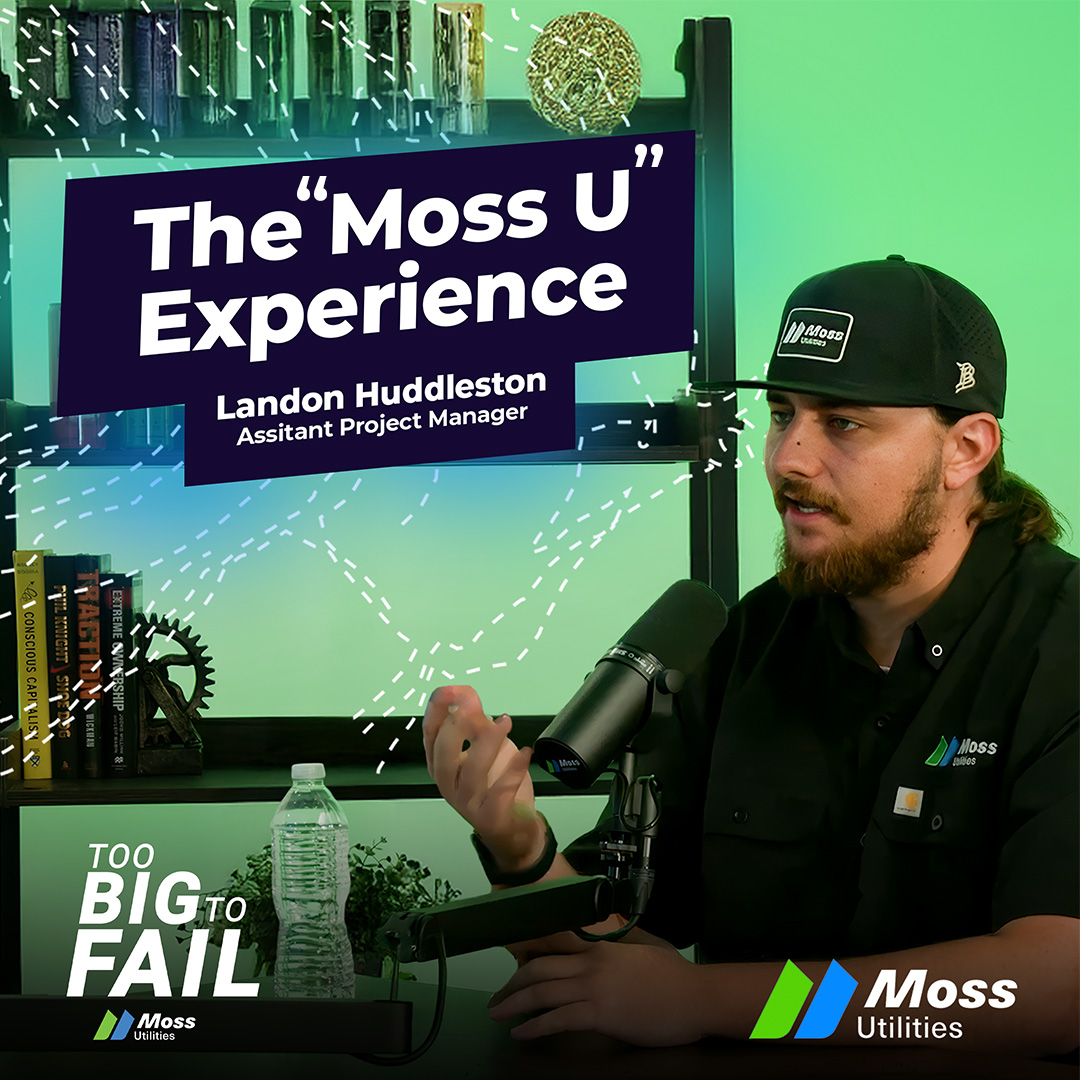
[00:00:05] Speaker B: The whole idea of Moss U. Right, it's a pipeline to bring in people with little to no experience where they're doing something, whether it be assistant project manager, junior estimator, those kind of things.
[00:00:15] Speaker A: Candidates had to go out to the field and, you know, we're going to kind of show them about the safety aspects about what we do here at Moss.
[00:00:22] Speaker B: Yeah, Working as field engineer, like I said, handling all the invoices, surveying on the project. Just the day to day on the project. It was just a great insight time to see, sit down, digest a lot of the information that's coming in and dive deep into certain topics and stuff like that. Be able to bring those guys in, give them all the tools and resources they could possibly need to learn how this business operates and to move into a full time role after that. To me personally, that's unheard of. I've never seen a company do something like that and it's truly special.
[00:01:08] Speaker A: Landon.
[00:01:09] Speaker B: What's up, man?
[00:01:10] Speaker A: How you doing today?
[00:01:11] Speaker B: I'm good, Good. Excited to be here.
[00:01:13] Speaker A: Nice. All right, so let's start off with too big to fail.
Moss Utilities.
You know, we're a company that's growing, striving, not perfect by far, but damn hard working. Right?
[00:01:31] Speaker B: Yeah, for sure.
[00:01:32] Speaker A: You know, one of the things that I think Garrett really likes to focus on and is people. And when I say people is like trying to make people better people. Right.
And so Mossy, when Masu first, you know, came up, I was like, that's. This is very interesting. Sounds like an internship. Right.
They didn't really know what to expect. They just, I just knew that there was going to be a safety aspect to it to where, you know, there's going to be a round where the Moss U candidates had to go out to the fields and, you know, we're going to kind of show them about, you know, the safety aspects about what we do here at Moss. Right. And so, you know, a couple months later, you know, we have Moss U candidates starting and then there's land in Huddleston. Right. So, you know, let's talk a little bit more about you, you know, where, where, where'd you go to school at, man?
[00:02:24] Speaker B: Yeah, so I went to high school out in Saginaw at Boswell, and then from there I transitioned to nctc, went to welding school. Kind of realized that wasn't necessarily the fit for me. You know, I've got some lung issues. With asthma and stuff like that. So doing the welding just didn't end up being the right move. So, you know, I started looking, you know, what I. What can I do different?
What's. What's going to be the best fit for me? And that's when I came across LinkedIn posts that Garrett put out about Moss U and about starting a program that was going to be a new pipeline to bring in new people with little to no experience.
[00:03:00] Speaker A: So originally from Fort Worth, Saginaw area. Right. It's kind of like a subsidiary area of Fort Worth. You know, it's funny you say that. Boswell, right. The reason I say that is because I went to Saginaw. I went to Saginaw High School.
[00:03:13] Speaker B: Big rivalry.
[00:03:14] Speaker A: Big rivalry. Right, the wagon. Right, the wagon wheel, whatever. I didn't play football. I played baseball.
So we did play them in high school. Played in baseball.
My cousin, she actually graduated from. From Boswell.
Me and my sister, brother both went to Saginaw and we all graduated from there. My younger brother, he didn't get to graduate from there because we moved.
And then that's whenever they opened up Chisholm. Chisholm Trail High School. And so, I don't know, it's just interesting to know that you're from that area.
[00:03:48] Speaker B: Hey, let it know right now on record, Basel is better than Saginaw. I mean, I was soccer, but we never lost the Saginaw. Just saying. Just saying.
[00:03:58] Speaker A: All I'm saying.
All I'm saying is that Basel has been around for years.
That's all I can say. Man. Basel was one of the first high schools that came up in, you know, Eagle Mountain ISD school district.
[00:04:13] Speaker B: Yeah, I think it actually was the number one believe. When I was there, we were celebrating the 30th 40th anniversary, one of the two.
[00:04:20] Speaker A: And I believe Saginaw started in like 2006 or something like that. So it hasn't been very long.
Well, that being said, you know, you came across a LinkedIn post, you know, came across Mossyou. What were you doing at the time? Where were you working?
[00:04:35] Speaker B: Yeah, so I was working for company, doing a bunch of sewage treatment plants, water plants, that kind of thing.
Was kind of a field engineer there, working, doing a lot of the surveying, that kind of thing, invoices, stuff like that. But, you know, one thing I noticed about that company is, you know, I didn't necessarily feel like there was a whole lot of room to grow, so I felt kind of stagnant, wanted something else. You know, obviously I was younger.
I Was excited to go out and get. Try to build a career, ready to go, and then went somewhere like that. And it just felt like I was very stagnant, like I wasn't getting very much.
[00:05:11] Speaker A: Were you going to school still at the time?
[00:05:13] Speaker B: Yes. So, yeah, I was transitioned out of welding and moved into construction management, working on a degree at tcc.
And it really just kind of propelled me. You know, I saw that LinkedIn post, I was like, you know what, that. That sounds interesting. It sounds like something I'd be willing to do and feel like I would get a lot of benefit out of it. So, you know, I was like, shoot Garrett a DM and just see what happens. And lo and behold.
[00:05:38] Speaker A: Yeah, but you were, you know, I just. Just because we've talked in the past, you know, you were working for your dad at the time, right?
[00:05:45] Speaker B: Yeah, yeah. Working as field engineer, like I said, handling all the invoices, surveying on the project.
Just the day to day at one project, but at the same time, not really feeling like I was going anywhere. It was the same thing day after day. Didn't see anything developing there, didn't see any growth, really. So felt like it was time to transition out. I needed a change. Yeah, change.
[00:06:11] Speaker A: What was your first impression on the, like, the interview phase of it? You know, what were your thoughts?
[00:06:17] Speaker B: Yeah, so craziest part is I almost didn't come to the interview. I was talking to one of our PMs over there, and he said, you know, this company is good. You know, they're pretty flexible, this, that, trying to sell it to me. And I was this close to not going in for that interview. And I even emailed Alexis. I was like, you know, I don't. I don't know if this is right.
Timing's not lining up. Is there any way we could possibly just reschedule and, like, you know, just give me a little bit of time to think about it?
[00:06:47] Speaker A: Yeah.
[00:06:47] Speaker B: And ended up coming in for that first round of interviews. And even after that first round of interview, I was sold on Moss. You know, I walked around, saw the people working here, saw the facilities that are operating, Obviously, we got super amazing pickleball courts, gym, personal trainer, all these amazing benefits.
But I think the main thing that stuck out to me is I walked around the office and I saw people that actually looked happy about what they were doing. And that was. That was quite surprising to me, you know, came from a company where people were just kind of there to be there. I mean, it was just work at the end of the day. But when you come walk around place like this and it's. People are excited to be here, they're happy to be here every day. And you know, I felt like that was something I wanted to be a part of, you know, I mean, the.
[00:07:36] Speaker A: End goal, you know, no matter what you do, where you doing it, the goal is to be happy where you're at, right?
[00:07:45] Speaker B: Yeah.
[00:07:45] Speaker A: If you can't be happy where you're at, that's not even worth it. Right?
[00:07:48] Speaker B: Yeah. I mean, I feel like the dream is, you know, if you love what you do, you're more than willing to do it every day.
[00:07:53] Speaker A: So first round comes around. How many rounds? I can't remember how many rounds they had.
[00:07:56] Speaker B: So yeah, we did two rounds total. So that first round met with the whole team, did the interview process and then they gave me a tour. And when they gave me that tour, that's when I really realized that, okay, you know, Moss is different than every other construction company. Like they actually care about their people and the culture and that's the main driver here. And I mean I just took to me, it made me feel a little bit more worth per se. You know, I'm going to a company that actually cares about me. I'm not just a number, I'm not just a button pusher, something like that. They actually care about the person. So that, that meant a lot to me personally.
[00:08:30] Speaker A: Yeah. So, so let's, let's dive in a little bit to that next phase. Right. So obviously you got chosen to be one of the candidates to come on board for Moss Utilities. Right. Because it was you, Dantoine, and I believe it was Maurice.
[00:08:47] Speaker B: Right, And Maurice and Kelvin as well.
[00:08:49] Speaker A: Kelvin, right. Which Kevin was, was someone who already worked here. He was already working in the estimating department.
[00:08:54] Speaker B: Yeah.
[00:08:56] Speaker A: You know, I think your, your first rotation was out in the field, right? Or technically out in the field, right?
[00:09:01] Speaker B: Yes, sir. Yeah, I started out in the field.
[00:09:03] Speaker A: So who was your first superintendent that you worked?
[00:09:05] Speaker B: Yeah, so actually the first project I got to go to was a Universal project. And I mean. And what an introduction. I mean that project's very high level project too. Just has a lot of eyes on it given that the fact that it's a Universal Studios project.
And I mean I went out there and I was just blown away.
[00:09:24] Speaker A: You have any expectations? Right. Like what were you like expecting?
[00:09:27] Speaker B: Like, I mean, I figured, you know, I came from a company where we did pipe, so I just figured we were putting pipe in the ground. Yeah. You know, that kind of thing. But I Got out there and I saw all these moving pieces and I realized, like, oh, man, this picture is a lot bigger than just putting pipe in the ground.
And, you know, it rubbed off on me. You know, I felt like part of a team. You know, I felt accepted. I was like, you know, what was.
[00:09:48] Speaker A: Your first interaction with Christian? Because Christian.
Christian's a go getter, man. He's like, you know, like, you're not gonna catch me slipping type of guy. You know what I mean?
[00:09:58] Speaker B: Yeah, 100%. So I spent. Even after those first few days, I started to notice that Christian's a very, very busy man. Constantly taking phone calls.
Phone calls. And you know, one thing I noticed about him while he was taking these phone calls and talking to the supers and stuff like that, that guy is committed. I mean, he wants the best for the people that work for him or under him, as well as for the project as well. And I feel like having superintendent qualities like that is just unreal. I mean, I wasn't used to something like that.
[00:10:30] Speaker A: Yeah. Because. Because you. So you build the relationship as a superintendent. Right. Just kind of speaking for them. They build the relationships with the foreman. Right. They build relationships with the field guys. Especially Christian. Right. Because he comes from the ground, Right. He knows the labor work, you know, all the way up, right? Yeah. So being a superintendent, that kind of. And now general superintendent. Right. He knows what it takes to be what they are, right? Yeah. And building those relationships with them and as well with the. The general contractors. Right. That general contractor is not an easy general contractor. Right. Balfour is. They're a top notch general contractor. Right.
[00:11:04] Speaker B: For sure.
[00:11:06] Speaker A: But yeah, he definitely. He's one of the guys that have dedication. Right? Dedication, hard work there day in, day out, you know, late days, early mornings type of guy, right?
[00:11:18] Speaker B: Yeah. And I mean, to talk about commitment, let's. Like we were out there. One of my first days out there, we were out there installing some duck bank and. And the crew that we were working with was shortened to operate. I don't know if it was cause he was sick or they let him go. One of those two things, you know, not too sure. But Christian did not hesitate to hop in that excavator and start digging that trench to help out his crew, to help out the project, stay on schedule, stuff like that. And you know, that spoke volumes to me. I mean, not every day you see superintendents being able to humble themselves to go out and actually do some of the field work instead of just supervising and helping out the foreman. And so seeing something like That, I mean, it just. It made me feel good about the company I went to. You know, like, these guys are committed. They're willing to do anything. They in everything to keep a project on schedule and successful. I mean, and that is how long Spoke volumes to me.
[00:12:09] Speaker A: How long were you on that project for with Christian?
[00:12:12] Speaker B: I would say probably about a month or so.
And throughout that whole month, I mean, obviously you see the project develop and the guys working with each other and. Yeah.
[00:12:22] Speaker A: Did you have any doubts about the program at that time, or were you, like, all in? Like, you know, this is what I want to do.
[00:12:27] Speaker B: You know, for the first few weeks there, I was a little. A little hesitant. You know, I was out in the field a lot of times. I didn't see a whole lot of the things that were happening behind closed doors.
But during that first month, we did some Moss U presentations. And, I mean, seeing the people that they brought in and how willing they were to just put effort into us, I mean, how can you not be committed when you have people on the sidelines that are doing anything and everything to make you better and just set you up for success in general?
[00:12:54] Speaker A: So do you remember the first MASI presentation? Who was it?
[00:12:57] Speaker B: Oh, man. If I'm not mistaken, it was the Garrett that actually gave the first MASI presentation. And I believe it was just over. Moss as a whole, you went into his dad and his company and kind of some of the struggles they developed over the early years. And that's kind of when I realized, like, oh, man, the whole reason Moss use the thing is because they're trying to bring people in and keep them. I mean, you think about loyalty and stuff like that. I mean, you bring someone in with little to no experience and give them all the tools they could possibly need for success and build on those are going to be your most loyal people.
[00:13:33] Speaker A: You know, what I've noticed about Moss in particular is like, the.
The dedication that Gary has, because it's not at every company where the owner is this involved in the company.
[00:13:46] Speaker B: Right. For sure.
[00:13:47] Speaker A: You know, I've been at other companies and obviously the owner here and there, and they'll say hi and everything, but, like, Garrett is, like, involved. You know what I mean?
You know, he cares.
He cares about, you know, the way our machines look. Right. You know, the big blue machine, you know?
[00:14:06] Speaker B: Yeah.
[00:14:07] Speaker A: Seeing a big blue machine on a project, that's like, no one does that, you know what I mean? So to be the first, you know, let's just say utility contractors to do that and be that involved to a company says a lot. Right. Because you don't see them 100%. To take time out of the day to. To present to a MASSU candidates or, you know, that have been into this program says a lot. Right.
To me, that means a lot. Right?
[00:14:34] Speaker B: Yeah. And it's not even that he gave that press presentation, that Garrett's one of those guys that even if you see him in the hallway, he's going to ask you, hey, man, what's going on? How's it going? And he might remember a conversation from a few weeks ago, and he's going to follow up on something he asked you about. I mean, whether it be kids, what's going on at home, that kind of thing. He's truly a very caring person. And just, I mean, it's not something you see a lot at a bunch of construction companies where the owner doesn't really come around a lot. And Garrett is always there. I mean, even when we first started, Moss, he told every single one of us, hey, if you need anything, do not hesitate to call or text me and reach out. And that's coming from the owner of the company, not just my boss, per se.
And, I don't know, something like that. That speaks volumes to me that, hey, you actually care about your people.
[00:15:23] Speaker A: Yeah. So you went from. Let's bounce back to your first rotation. You went to universal, right? Frisco. P117.
[00:15:32] Speaker B: Yes, sir.
[00:15:33] Speaker A: You went from that project working with Christian, and then I think they transitioned you to another. Super correct.
[00:15:40] Speaker B: From there they transferred me to Giovani. And with Giovani, I went to see a couple really cool projects, some data centers and stuff like that. So.
[00:15:48] Speaker A: Yeah. But did you see any difference between Giovani and Christian, like, as far as their interactions with the.
[00:15:54] Speaker B: Yeah, obviously they handle day to days differently every day. Um, but one thing I did notice that was very similar is how dedicated they are to the work they're doing as well as to the guys that are under them. And I mean, I mean, obviously that means a lot. So seeing having a boss that cares about you and what you're doing in life and just that kind of thing, it makes you feel more welcome, makes it feel more like a family environment and stuff. So I saw that from both Giovanni and Christian, and it was something that was very welcoming and just made me excited to be here.
[00:16:24] Speaker A: Yeah. What was your thoughts on being out in the field? Like, how does it, you know, look now?
You know, looking back, now that you're a p.m. here at. Or Assistant p.m. right. You're an Assistant p.m. here at Moss. Looking back, how did being out in the field help you?
[00:16:43] Speaker B: Yeah, so I think it's one of those things that gives you a little bit of clarity. I mean, it makes you realize that those guys we have working out in the field are absolute rock stars. They bust their butt every day to get things done, done on time, done in quality manner, and it's, it's very humbling to see those guys work as hard as they do and do everything they do just to be as successful as possible. I mean, the level of dedication out in the field is unreal.
[00:17:13] Speaker A: Yeah, because I remember there was a point where you were with Joanne, you were with Giovanni, and if I'm not mistaken, you were at Red Oak.
[00:17:23] Speaker B: Yeah.
[00:17:24] Speaker A: And you were with Jose Castillo's crew. Right. How was that? How was working with Jose Castillo? Jose Castillo is a great foreman.
[00:17:31] Speaker B: Yeah, this guy knows Jose Castillo, a great foreman. And then as well as the guys on his crew are phenomenal. I mean, obviously, first few days, it's a little awkward meeting new people and stuff like that, but normal. After that first little phase, dude, those guys couldn't have been more accepting.
I mean, they taught me any question I could have possibly had. Whether there's language barrier there or not, they're gonna help me figure out an answer for it.
And I think that speaks volumes too. Even with a language barrier, those guys are more than willing to teach you anything and everything. And I mean, makes a man feel good about himself, you know, feeling accepted, feeling like a part of a family.
Just. It was special. So.
[00:18:15] Speaker A: So you say that, right? And I have my experience of being out in the field as a laborer, right?
And I had a really good experience, right, because the guys, just like you said, they were very welcoming.
You know, I was a young, young kid, I never brought lunch to work, right?
So.
So those guys, you know, they had their wives, they would take them lunch and, you know, they would look at me and they were like, hey, you know, come, come get a taco, you know, and like, all right. He was like, you sure?
You know, they're like, hey, come on, come on. And you know, we just gather around some shade, eat a taco, you know. Did you have anything similar to that?
[00:18:49] Speaker B: Yeah, I mean, often there's one day where I think Jose bought lunch for all of us and we all ate together. I mean, and that's a day to day thing. I mean, those guys out in the field, they eat lunch together every day. They're constantly talking to each other and that's one thing about field work that I've noticed. You know, it's hard, especially when I was out there. It was during the middle of summer, so we're talking it was hot, 100 plus degree heat, just brutal. But those guys, I mean, they're out there laughing, joking, having fun.
[00:19:20] Speaker A: Yeah.
[00:19:21] Speaker B: And I mean, at the end of the day, that's what, that's what it's all about.
[00:19:23] Speaker A: I bet you got a lot of these, right? Like, hey, bring us some water.
[00:19:26] Speaker B: Yeah, bring us some water, man. For sure. So constantly making runs to the cooler. But I mean, it was something special, you know, seeing those crews and just the way they treat each other and I don't know, man, it was special.
[00:19:38] Speaker A: Yes.
[00:19:39] Speaker B: Really was.
[00:19:40] Speaker A: Looking at the plans now and you know, you being at the field, like, you actually saw like, you know, the water line going in at a certain elevation crossing, you know, whatever it was. Right. So did that help you out as far as like now what you see as a PM or assistant pm?
[00:19:57] Speaker B: Yeah. So a lot of times, project managers, I mean, we don't get to go out into the field.
Super, super often.
A lot of time we're spent behind a computer staring at plans, that kind of thing.
Having the opportunity to go look at those plans and then look at the material being installed in the field at the same time. I mean, that's some skill and knowledge that you just can't get sitting behind a computer. There's ways things are done in the field that can't really necessarily be written on a piece of paper that makes sense. And being able to see that and then transferring it to what I do now, I mean, it couldn't be more of a help. It gives you a greater understanding of how things are actually being installed out there, not just how it looks on a plan.
[00:20:43] Speaker A: Yeah, I mean, very well said. The plans behind a computer and actually doing the work is very different. Right. Regardless of, you know, the situations. 100%, you know. So you were out there for, for quite a time. I don't know how long was the rotation for?
[00:20:58] Speaker B: Yeah, so when I went through, it was mossy, was set at one year. So it was four months per rotation.
[00:21:02] Speaker A: It's four months per rotation. You're four months out in the field. So it was Christian, Giovanni, who else did you spend time with?
[00:21:08] Speaker B: I got to spend time with just about all the superintendents, the general superintendents, Julio, Jose, some of the regular superintendents, Gerardo Giovanni, Christian, Cody, couple others.
[00:21:22] Speaker A: Good old buddy.
[00:21:23] Speaker B: Yeah, good old buddy.
[00:21:24] Speaker A: Good old buddy.
Yeah. Those are Good guys, man. And I think it takes guys like that to really make it, like you said, fun to be here, right?
[00:21:34] Speaker B: For sure.
[00:21:35] Speaker A: Enjoy what you do, Right.
Nobody likes to go to work and not enjoy what you do.
[00:21:39] Speaker B: Yeah. And then also just seeing their levels of commitment to what they're doing makes you want to be a part of it because, you know, you're being a part of something that's bigger. We're putting in all these obviously wet utilities for greater development of the community and you know, being a part of a growing community as well as just being able to lend that helping hand, I mean. Yeah, it moves you.
[00:22:03] Speaker A: So first rotation out in the field superintendents majority of the time.
What was your next rotation after that?
[00:22:10] Speaker B: Yeah, so after going out in the field, I moved into estimating.
So a lot of fun there as well.
Yeah, so estimating wasn't really something I came into with previous experience or anything like that. I mean, the field rotation, I. Previous job, field engineer. I was out in the field all day, every day. So I was super excited and looking forward to going into the estimating side just because it was something I'd never seen before, never done before.
Yeah. So that's kind of where I was feeling when I moved into that side.
[00:22:40] Speaker A: Did you work, I think a lot of stuff that you were doing with like takeoffs, right?
[00:22:45] Speaker B: Yeah. Take offs, putting together bids, looking at the bid calendar, see what's coming.
Kind of just the basics. More say not, I guess I said not putting together bids, but we weren't necessarily putting together bids, but helping out the estimators that were putting those bids, doing the takeoffs for them, talking about them, what's going on and then being there for them to teach us and tell them like, hey, I'm putting this amount of money in here for this.
Hey, look out for that in the plans. Because things like that cost lots of money and it can have an effect on the bid.
So being able to pick up on key details and stuff like that was super beneficial.
[00:23:22] Speaker A: Yeah. I don't think a lot of people realize how important it is to have that.
Not necessarily the field experience, but to really understand the field. Because, you know, if you're out in the field, you can easily plug and play, you know, numbers and you know, what the work consists of, right? Yeah. Because you're like, oh, you're at this depth, you know, there's more dirt to work with. There's bigger machines, there's more money involved, there's, you know, more work that has to be gone, you know, has to be considered.
You know, something as simple as your Trinity safety plan.
[00:23:59] Speaker B: Right.
[00:24:00] Speaker A: There's money that is involved with that. It's a cost, right?
[00:24:05] Speaker B: Yeah.
[00:24:05] Speaker A: So the estimators have to make sure that they have to put that money in there for that, Right? They have to make sure that there's money in there for a bunch of things that a lot of people don't take into consideration. Right?
[00:24:15] Speaker B: Yeah. And that's one thing that really caught me off guard, you know, coming from working in the field. The majority of the time you don't think about little things like that. So when you sit next to these estimators that are putting together bids and you see all these different line items that they're putting into it, trench safety, TV testing, inspections, stuff like that, it gives you bit more of a larger perspective. You're like, oh man, when I was out in the field, I didn't think about these things costing money. I was more so just focused on putting it in the ground and getting into operating. And I mean seeing that was kind of like a, a little bit of a wake up call. Almost like, oh man, there's a whole lot more moving parts in here than I originally thought there was.
[00:24:54] Speaker A: Yeah. If those guys don't work, we don't have work, man.
[00:24:56] Speaker B: Yeah, for sure.
[00:24:57] Speaker A: Work for us.
[00:24:58] Speaker B: For sure.
[00:24:59] Speaker A: And I think that's what I really try to, you know, tell the guys on the field, convey that message that like without the estimators we have no work. Right. But we have to be able to, you know, do the work. We have to be able to do the work out in the field so that they can bid those projects.
[00:25:14] Speaker B: Right? Yeah.
[00:25:15] Speaker A: So our execution out the field depends on how we bid those projects, essentially.
[00:25:21] Speaker B: Yeah. And when I was in the estimating rotation, they, they summed it up for me really nice. You know, you think about it, estimators are kind of like the hunter. They're going out there getting the kill, getting the project. And you got your PMs, they're cooking the meal, getting it ready, and then you got your superintendents who go out there and serve the meal, give it to the client, give it to the customer.
And thinking about it like that, it kind of put things in perspective. Like, okay, actually, you know what, this makes a lot more sense now. So.
[00:25:49] Speaker A: Yeah, I guess. You like hunting?
[00:25:52] Speaker B: Yeah, you could say so.
[00:25:54] Speaker A: I wish I grew up more into like that type. Like, you know, my parents are both, you know, Hispanic, but like, I wish I grew up like hunting, like, you know, shooting and yeah, maybe bow hunting. Or fishing, you know.
[00:26:05] Speaker B: Yeah, it's. It's a good time. Good time.
[00:26:07] Speaker A: I can't even get Christian to take me hunting. So there's that, um, you know.
Yeah, I mean, that's, that's, that's great. It's a good perspective to put it in. Right. Like, you know, you're relating to it in the way that you understand it. Right.
[00:26:21] Speaker B: Yeah, for sure.
[00:26:22] Speaker A: Um, so we go from superintendents, you know, to the estimators, you know, working with them, you know, how was it? You know, I think, you know, a big face is like Edwin. Right. How was it working with him, you know? You know?
[00:26:36] Speaker B: Yeah. I mean, people like Edwin, John, those guys, I mean, they've been around here, they know what's going on.
I think the biggest thing for me was how willing they were to teach you. It's not every day that you go somewhere and the people that are high up in that department are willing to pour into you.
But that's something I notice here, is it doesn't matter who the person is at Moss. They are more than willing to pour everything they know into you. And to me, that means a lot. I mean, because you could just sit there behind your title, um, just do your work and not worry about anyone else. But the fact that you're willing to give in to your teammates that don't necessarily know as much as you, I mean, that speaks volumes about their character.
[00:27:20] Speaker A: That's what I like about those guys is that they're very humble, like Edwin. Like, I have nothing to do with estimators. Right. Like, you know, essentially like their day in, day out work.
But, like, Edwin is like super humble, you know, John. You know, like, I'm like, hey, man, we're using type 2 hard hats now. Like, there's a cost for that. You know, they're. They're not, you know, they're more expensive than what we're using before. You know, there's a cost for that.
[00:27:45] Speaker B: Yeah.
[00:27:45] Speaker A: You know, we have these projects where they're requesting on site safeties. There's a cost for that, and it's not cheap. Right. So we got to make sure that these guys know this stuff. And, you know, those guys are just humble. You know, they're not, you know, they could have easily just said, you know, hey, don't worry about it, I got it. You know what I mean? Yeah. On the other hand. Oh, really? You know, like, you know, what's the average cost for, you know, hard hat? You know, that's type two. Or what's the cost for you know, an on site safety. Right. And how long and what are the requirements? And I'm like, it just all depends. Too many variables. Every GC is a little different. Every contract's a little different. Just kind of have to, you know, you know, plug the number in that makes the most sense.
[00:28:24] Speaker B: Yeah. And I mean, those two guys both, I mean, our core value, always striving for constant growth. I mean, those guys embody it. I mean, with Edwin starting in the field, working his way up to where he is now, I mean, those guys are always striving for constant growth and also always striving to help the people around them grow. And I mean, you can't beat that.
[00:28:45] Speaker A: Yeah. What was your next transition or rotation from the estimators?
[00:28:50] Speaker B: Yeah. So after estimating, we moved into project management.
That was the last rotation I did. And during that rotation, I truly, truly fell in love with project management. And I mean, it was great.
[00:29:03] Speaker A: Yeah. Well, let's.
Let's talk a little bit more about what, you know, that looks like being a, you know, a project manager. I know that you weren't, you know, essentially a project manager when you were in Moss U. Right. But you were helping out a project manager, you know, dealing with general contractors, receiving a project, handoffs, you know, change orders, RFIs, all that good stuff. You know, what was your experience with that? You know, working with a project manager? I can't remember who you were working with.
[00:29:32] Speaker B: Yeah, so project management. I was over in there with Ryan McBride. And one thing about project management, there's tons and tons of moving parts from permits, handoffs, plan reviews, change orders, RFIs, tons and tons of moving parts, little details, little things you got to pay attention to.
And, you know, that was something that was interesting to me. I was like, you know what? There's a lot to learn here, a lot to do. And then being around someone like Ryan McBride, who's even. Doesn't matter necessarily how busy he is, he's more than willing to come over to my desk like, hey, let's walk through this. Hey, you did this wrong. Try doing it this way next time. Just giving you ideas, things like that. I mean, it was. It was awesome having someone there that I could rely on confidently and not worry about, oh, I'm being a bother, I'm being a nuisance. No, it wasn't like that at all. He was more than willing to be there and help me, teach me things like that. And I mean, that was true in just about every rotation. So seeing things like that, it was great and very, very Beneficial.
[00:30:36] Speaker A: Nice. How many? I know that I think it was like every other Friday I would have like presentations. Right. What were your thoughts on those presentations?
[00:30:45] Speaker B: Yeah, so Moss, you and presentations were awesome and it's a great opportunity to dive deep into different ideas, different concepts, things like that.
So going to some of those Moss U presentations, learning more about the proven process, how estimating works, project management, different details and stuff like that. I mean they're all beneficial at the end of the day. Right?
Because I mean the whole idea of Moss U. Right. Is a pipeline to bring in people with little to no experience and then by the end of them, by the end of the period of time that Moss U runs, to hopefully move them into a full time role where they're doing something, whether it be assistant project manager, junior estimator, assistant superintendent, those kind of things. So going to those presentations about different things or whether it be bonds, contracts, wip, different things like that, it was just a great insight. Time to sit down, digest a lot of the information that's coming in and dive deep into certain topics and stuff like that. A good opportunity as well to just ask questions about things that you're confused about.
So I mean I personally loved them. I thought they were great.
[00:32:01] Speaker A: You know, one of my, I was going to say one of my favorite ones, but one of the presentations that I attended, I just so happen to, you know, hop in, was the JM materials one.
[00:32:15] Speaker B: Yeah.
[00:32:15] Speaker A: And honestly I was very surprised on like, you know, I can't remember the guy's name who was doing the presentation, but he was super knowledgeable on like all the dirt, you know, the sand, the gravel, the size of the gravel, you know, and you know, what, what cities accept and what they don't accept and all that good stuff. It was very interesting because nobody really thinks about like how intricate it is to be able to deliver a product that a customer needs.
[00:32:47] Speaker B: Yeah. And it's one thing you don't think about a lot when you're out in the field. You know, you're installing pipe, you're putting rock around it, sand around it, why you're not thinking about why are we using this rock, why are we using this sand.
[00:32:57] Speaker A: Yeah.
[00:32:59] Speaker B: And to be able to bring someone in that can explain those different things and the different purposes behind the different materials as well. I mean it's, it was wonderful. I mean it answers a lot of questions that people are confused about. I mean just gives you a little bit more insight and just overall makes you a more well rounded person.
[00:33:15] Speaker A: Yeah, those guys are great.
I Think Moss has been a really good, great relationship with them.
I think there was a project I was out in, I think it was like Marine Creek or something. It was out in Fort Worth and JM Materials stopped by and I think it was.
I can't remember what he does over there, but he showed up, you know, and even to our guys, like, he opened up his tailgate, you know, pulled out a cooler of Gatorade and waters, and he was like, hey, you know, brought all the Moss guys that were on that project and everybody was getting drinks, man.
[00:33:47] Speaker B: Yeah.
[00:33:47] Speaker A: I just, you know, speaks volume of the relationships that we build with them. Right. You know, that guy didn't care who grabbed the drink. He's like, hey, take two, you know, take three, you know, and it's really cool, you know, just seeing them, you know, and doing that Moss presentation for you guys, just to kind of see the bigger picture here at Moss.
[00:34:06] Speaker B: Right?
[00:34:06] Speaker A: Yeah.
[00:34:06] Speaker B: And I feel like that's one thing that's Moss is super good at. I mean, obviously one of the biggest things where we have here is culture. And that doesn't just involve just the employees, that involves our suppliers as well as our customers. I mean, we want everyone to feel welcomed and appreciated. Uh, and at the end of the day, it's one of those things that just makes us better as, as a whole. Yeah.
[00:34:29] Speaker A: So I know that that masiu, you can kind of quote, unquote, kind of compare it to like a internship type deal, right?
[00:34:37] Speaker B: Yeah, for sure.
[00:34:37] Speaker A: But if you really think about it, there's not that many utility contractors that have a, you know, program, you know, of their own that they want to build people in. Right? Yeah. You know, if you could give, you know, send a message out to somebody that wants to join this program or, you know, apply for this program, you know, what would you tell them?
[00:34:57] Speaker B: Yeah, yeah. And, you know, I think thinking of it as an internship isn't necessarily right.
I say that because, I mean, we're giving you the opportunity to go see the field estimating project management, to go see all these different aspects of what's going on at Moss, and then hopefully setting you up to go into a position that you either want to be in or you think you'll fit best in. Right.
With the end goal of going into position. A lot of internships, it's not necessarily that you're going to move into a full time role after it. You're just kind of there for the experience to kind of get a feel of things. But I feel like what Moss does really good About Moss U is it's a brand new pipeline to bring in people with little to no experience. I mean you look at De Maurice, they both came from very different backgrounds. Nothing to do with construction at all.
And to be able to bring those guys in, give them all the tools and resources they could possibly need to learn how this business operates and to move into a full time role after that, I mean to me personally that's unheard of. I've never seen a company do something like that. And it's, it's truly special.
[00:36:11] Speaker A: And there's definitely, there's definitely a need for, you know, people in construction.
[00:36:16] Speaker B: Yeah. 100.
[00:36:18] Speaker A: The very, very few in between. You know, do you hear that there's a kid that's graduating high school that says I want to do construction?
[00:36:26] Speaker B: Yeah. 100.
[00:36:28] Speaker A: You know, you know what we do? I want to be a ditch digger. Right. I want to, you know, operate a machine. They don't really think about that. So there's definitely a shortage of, you know, people that want to get into construction in general. And you know, let's get even more detailed into utility contractor. Right. You know, there's not that many people that want to do it. So the fact that we're opening this new pipeline to your point of people to bring into this business and grow is unheard of. Right.
[00:36:57] Speaker B: 100.
[00:36:58] Speaker A: You know, so transitioning to your role now, right, you know, you got hired on fully to a assistant project manager. You know, what were your thoughts about, you know, getting hired on board? You know.
[00:37:10] Speaker B: Yeah. So with project management being the last rotation in Moss U, obviously I fell in love with it then. So transitioning from Moss U to just being an assistant project manager honestly wasn't that hard because the role I was already kind of filling in as a Moss U candidate was already technically what an assistant project management. So that transition was super easy. But what also really helped about that is I had this previous four months field rotation where I gained a bunch of knowledge about what we're doing as well as that previous four month estimating rotation where I had all that knowledge. And then I was able to put those all together and then move into that project manager role and just have a greater understanding of how things are being done out in those different departments and just truly just gives you a better understanding, like I said, gives you a better skill set and it's just super beneficial.
[00:38:05] Speaker A: So the proven process was proven and you ended up in a position that you wanted to be in. Right. And best fit in.
[00:38:14] Speaker B: Right.
[00:38:15] Speaker A: But you know, that that's Great, man, to hear that, you know, you've been through masu. I know it's a new program, but it's. It works, right? It works. You know, I know it's very time consuming. I know it's a lot of work. It's not easy. Right? Because, yeah, you know, these guys, you know, let's just go back to the superintendent. Superintendents already have their, their job that they have to do. Right. You know, the general superintendents, you know, the estimators, they already have their job that they're doing, you know, and then additionally trying to help out. To help you guys out to be successful. Right. So that says a lot. You know what I mean? But, you know, overall success, you know, with Moss U program, the proven process, you know, it's. It's. It's there for a reason, right?
[00:39:00] Speaker B: Yeah. And I think I can speak for a lot of our mossview candidates, Dee, Maurice, Kelvin, that went through that first rotation. We were really truly the guinea pigs of it. But I think after those first few weeks when we realized and saw how much effort other people in the company are putting into this to make us better and to train us and teach us, I think it all kind of changed our ideas and mindset on it and truly allowed us to just fully commit and be a sponge and just absorb everything that they were teaching us as well as also gave us a willingness to be there for the next round of Moss U that was to come about to help make the program greater from our personal experience, what we've experienced when we went through it, and then use that to kind of help build it for the next round of people that are coming through. So the end goal is, you know, obviously as Moss U continues and grows and grows, that it's only going to get better.
[00:39:57] Speaker A: Yeah, right.
[00:39:58] Speaker B: Some more people that go through it, the more trial and error. I mean, it's only uphill from here and it's. It's super special and something a lot of us are.
Want to be a part of even after completing the. The whole rotation. I mean, and that it means a lot to me, Moss, you personally. And it's something I plan on being a part of for as long as I am here.
[00:40:19] Speaker A: That's great, man. That's great. I think everybody loves you here. I think you're hardworking. I know that being, you know, young and coming in on early days and leaving on, you know, late on a Friday or something, it's not that many kids are willing to do that nowadays. You know, they're ready for 3:30 to come around and just be able to clock out, you know?
[00:40:39] Speaker B: Yeah. And, you know, obviously, being younger, I. I have a little bit of that mindset. But then you come to a place like this Moss, I mean, and you just see how willing and dedicated everyone is. Surrounding it makes it super easy to put those long days in those extra hours, because at the end of the day, everybody else is doing it.
[00:40:56] Speaker A: Yeah.
[00:40:57] Speaker B: And it's. It feels good to get things done, especially here, because, I mean, these guys are going to reward you for it. Work hard.
But we also play hard, too.
[00:41:07] Speaker A: There you go. Play hard, Work hard. Play hard.
Well, man, I appreciate you coming on today.
You know, a big face with the Moss. You. You know, hopefully we can get more people to come in through the Moss you program and excel and, you know, be able to fill those positions that, you know, this industry is, you know, struggling to get people in. Right. Because there's not that many people that want to do it. But thank you for coming on, you.
[00:41:31] Speaker B: Know, I appreciate it. Yeah, I love talking about Moss. You. I mean, it's.
It's something different, you know, not something you'll see every day, not at every company. And it's. It's truly special.
[00:41:42] Speaker A: Yeah. So I'll see you on the pickleball court.
[00:41:45] Speaker B: Yes, sir.