Episode Transcript
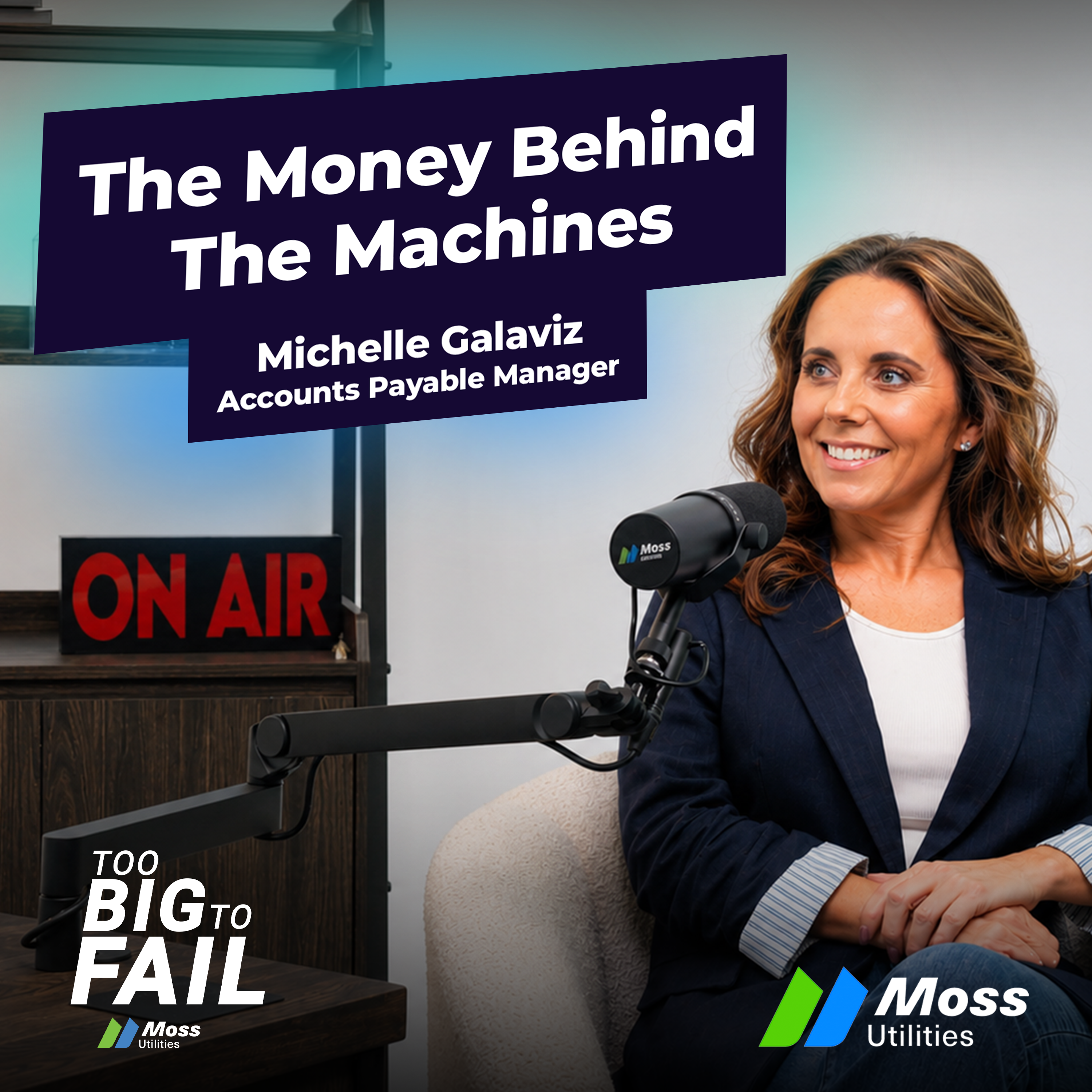
[00:00:00] Speaker A: AP is actually the heartbeat of the company because we are the ones that keep the company moving. Without ap, you don't have the materials
[00:00:10] Speaker B: that you need to an extent. Right. Because I feel like I'm the heartbeat.
You're an artery.
[00:00:15] Speaker A: Okay.
[00:00:17] Speaker B: I can be an artery, too. A clogged artery.
I think we're all arteries. I think we need to add arteries to the heart.
I appreciate you taking some time of your day and, you know, talking to me about what you do here at Moss and, you know, what. What impacts, you know, AP role has here. Right. Because a lot of the times the guys out in the field don't really understand the operations of a company. Right. And I think it's important for the guys to understand that, hey, money doesn't just go, you know, bouncing off the walls. It has its meaning. Right.
[00:00:58] Speaker A: Right.
[00:00:59] Speaker B: So. But we can start off with you, you know, where you're from and all that. You know, you said you grew up in Garland, right?
[00:01:04] Speaker A: Yes, South Garland High School.
[00:01:07] Speaker B: So you went to school here and everything.
What about, like, after high school? You go to college around here, or did you go out of state?
[00:01:14] Speaker A: You know, so I actually went to a school to be a paralegal assistant because I wanted to be a lawyer.
I didn't want to do all the reading.
But at the end of the day, the paralegals, it was a little too much, and I just dropped out.
Oops. And then I got married at 20, so I just started my career in AP.
[00:01:41] Speaker B: How long have you been doing AP for?
[00:01:43] Speaker A: Oh, wow. About 29 years.
[00:01:46] Speaker B: So what was your introduction to, like, the construction industry?
[00:01:51] Speaker A: So that was in 2021.
I started working for a smaller construction company, and I was a project accountant there.
And I was there for a little while, and I've just kind of moved on to bigger construction companies.
[00:02:09] Speaker B: Yeah, that's what I feel like that path that you took, like, you got into construction and you got hooked.
[00:02:15] Speaker A: Yeah. I didn't think that I would stay in it, but I have.
I've been in it since 2021.
[00:02:21] Speaker B: What made you want to stay in it?
[00:02:23] Speaker A: Opportunities, you know, I mean, we're in Dallas Fort Worth. The Metroplex just keeps growing. It's just. It's like a booming.
[00:02:33] Speaker B: Would you say that construction companies are definitely underrated to work for?
And what I mean by that is, like, no one thinks that you can really make a good career out of working at a construction company, or there's that perception.
[00:02:45] Speaker A: I think you can make a great career out of working at a construction company.
[00:02:48] Speaker B: But Would you have known that before going to First Construction Company?
[00:02:51] Speaker A: No, I would not have.
[00:02:53] Speaker B: Yeah. And that's what I'm trying to say is, like, people have that perception of a construction company that's like, meh.
[00:02:59] Speaker A: Yeah. Like, if you were in oil and gas, I would think, yes, you have a really good living. That's perception.
[00:03:06] Speaker B: Yeah.
[00:03:06] Speaker A: But in construction, no, you. You wouldn't think that at all. I have a completely different view on construction since I've started working in construction. Because before I would think, like, why does it take so long for a road to get built? Why does it take so long for a sidewalk to get redone? But there's so many different things that you have to go through in order to actually make sure that it's done correctly.
[00:03:28] Speaker B: Well, dive into that a little bit more. Right. Because you're talking about, like, why it takes long or what are the processes. Right. But there's also the money side of it. Right.
There's like, you know, who's going to provide all the material or who are we going to pay to do the work. Right. And that's kind of where you start getting a little involved. Right. Because you have to pay those people or pay the material or pay the tools or pay, you know, is that. Am I going down the wrong path there?
[00:03:55] Speaker A: Well, I think that because there's so many factors that go into actually building something, and you want to make sure that you have the right people in place. So if you're going to be the gc, you have to make sure that your subcontractors are, you know, reliable and honest and they do a good job because you. You're putting your name on that. And the last thing you want to do is have somebody representing your company in a negative way.
[00:04:21] Speaker B: And that could go down to a subcontractor or even a third tier. Right. Or a sub tier. Right.
[00:04:26] Speaker A: Yeah. You don't want somebody that's going to do shoddy work.
[00:04:29] Speaker B: Yeah, yeah. Because we definitely use a lot of subcontractors or vendors, I guess you could say, like hydro excavation or testing and inspections. Right. Of pipe. And we use, you know, like a boring contractor. We use concrete contractors as well. Right. So our name is still definitely on it, even though it's not us doing the work.
So I guess I see what you're saying when it comes to that.
[00:04:53] Speaker A: I mean, if you. If you were out there and, you know, Moss's truck is out there, people are going to see that name. So they're going to know. They're going to say, that, okay, well, Moss is the one that did that. They're going to work on that. They're going to look at that and go with the fact that, okay, so Moss is out there and they don't see the other subcontractors names out there as much because usually subcontractors aren't as well known. You have to be in the construction industry to actually know who a subcontractor is. I never knew who a subcontractor was until I got into construction and then I started working with the subcontractors and then I was like, wow, they're just like little mom and pop companies, you know, so they're not like big. But when you see, when you go to a construction site and you see Moss's name out there or you see other construction companies names out there, those are the ones that you affiliate with that.
With that job site.
[00:05:49] Speaker B: Yeah. So could you break it down? Like, I really don't know, like the entire in and out of like ap.
[00:05:56] Speaker A: So honestly, like AP is actually the heartbeat of the company because we are the ones that keep the company moving. Without ap, you don't have the materials that you need. We have to make sure that we keep our vendors happy. We have to make sure that our invoices are coded correctly. They have to be approved, they have to be paid in a timely manner. There's a lot that goes into it that people don't understand. They just think, oh, well, we ordered the material or we, you know, got this done so we need to pay it. Well, it doesn't always work that way because sometimes the invoice invoices are written wrong or has incorrect cost or the quantity doesn't match or, you know, the PM says, oh no, this isn't approved right now. Or you know, there's always something that could keep something from moving forward to getting paid. Or it's. If you're in a construction industry and you have subcons, you basically are a paid when paid.
So we can't always pay something just right then and there.
[00:07:03] Speaker B: So you're talking about paying people right now? I think, you know, correct me if I'm wrong. Right. Because it's not my expertise. But that kind of goes in hand in hand with like, like net 30. Right. Or net 60. Right. That just means that you'll pay those guys at a certain amount of time. Right. Or vice versa.
[00:07:21] Speaker A: We will have net terms with vendors.
Some want to be paid net and we have to try to negotiate with them.
[00:07:29] Speaker B: Okay, yeah. And that's where I Guess Moss has tried to do, from what I can see and hear, is take care of their people.
Right?
[00:07:39] Speaker A: Absolutely.
[00:07:40] Speaker B: Because it's. To your point, subcontractors are mom and pops, right? So if you're withholding money for 60 days and then they still have to wait another 15 days just to actually see that money, that's pretty impactful for a small mom and pops.
[00:07:56] Speaker A: Well, yeah, especially since in construction, you're paid weekly. Yeah, the guys out in the field, they want to get paid every week.
[00:08:03] Speaker B: Oh, yeah.
[00:08:04] Speaker A: Before I came to construction, I got paid either on the 1st and 15th or the 15th and the last day of the month or it was every other Friday.
[00:08:10] Speaker B: Yeah, see, that's corporate.
[00:08:12] Speaker A: I know that's corporate.
I mean, I kind of feel like I'm being spoiled by getting paid weekly. Yeah, it's nice.
[00:08:19] Speaker B: I don't think I've ever. Well, I think my very first job, when I was at Kroger, I was. I got paid bi weekly, but it was like. It was my high school job. You know what I mean? I didn't.
[00:08:28] Speaker A: Right.
[00:08:29] Speaker B: All right. You don't pay me, you know, every two weeks. Cool.
[00:08:32] Speaker A: I worked at Subway.
[00:08:33] Speaker B: Subway. I could not work in the food industry.
[00:08:36] Speaker A: I was a sandwich artist.
[00:08:37] Speaker B: A sandwich artist. I like how you put that. Sandwich artist. No, I couldn't.
My brother worked at water, but I think both my brothers worked at Whataburger. My sister worked at, you know, like, Flips Patio Grill and Boston's Pizza and other, you know, restaurants, but I could never do that. I don't know why. I can see myself working at, like, a fine dining place, though. Like. Like a nice, nice place. You know what I mean? Me and my wife go to Don Artemios, which is this nice Mexican cuisine restaurant in Fort Worth.
And, like, I can see myself, like, tending to these people and, like, you know, topping off their water offering and helping those people out. But not fast food. I cannot do that.
[00:09:22] Speaker A: I don't think I could, either.
[00:09:24] Speaker B: Get mad at me for flipping your burger. Sorry.
[00:09:26] Speaker A: Subway might be fast food, but it's not. I don't look at it as fast food. I wasn't on a hot grill.
[00:09:32] Speaker B: Yeah, you just have ovens. Hot ovens. Anyway, so put it into perspective with AP is the heartbeat of Moss, right?
To an extent. Right. Because I feel like I'm the heartbeat.
I mean, we're all, you know, you're an artery.
[00:09:50] Speaker A: Okay.
[00:09:52] Speaker B: I can be an artery, too. A clogged artery.
I think we're all arteries. I think we need to add arteries. To the heart.
Each. Each.
But anyways, like the, the excavators. Right. I think let's. What was that one excavator that they went to go see in Vegas? It was, I think it was a Kobelco 850. It was a Kobeco 850. Right. And it's from my understanding it was the first Kobeko of its kind in the United States.
And that's like huge. Like most utilities made that move. Right. But Ms. Michelle had to find some way to pay for that, right?
[00:10:37] Speaker A: Yes.
[00:10:37] Speaker B: Or financer or whatever. How we, you know, I don't know how we are dealing with that, but there's money that has to go allocate be allocated to pay for that. Right.
[00:10:46] Speaker A: I mean, that's why we have super smart people here at Moss that we can figure it out.
[00:10:53] Speaker B: So then that's how.
That's where like the, the whole net thing where it goes into place with paying vendors like that. Right. So I'm assuming we played. We, we're paying.
I, I guess it might be like Bain is probably the company that, that's
[00:11:09] Speaker A: a big vendor of ours. Ferguson is a big vendor of ours.
[00:11:13] Speaker B: So there's Bain, there's Ferguson, there's upt.
Right. Which is one of our most tenured vendors that we've had over the years that provide trench boxes and PPE for us.
But it's those relationships that kind of really make Moss who they are. Because I think that's what Garrett's motto is, building relationships with these people.
[00:11:36] Speaker A: Yeah. And in ap, you have to keep vendor relationships going.
So if you can have a good rapport with people in the accounting department. We speak to the people in the accounting department of those companies. Right. And the project managers or the superintendents or whoever's doing the ordering, they're the ones that, they're not the ones talking to the accounting department.
So we have to keep a good rapport with the accounting department, with our vendors, so that it keeps us moving.
Especially if we get tied up on something.
There might be a discrepancy on an invoice or the project manager didn't agree to something. So we have to keep in communication with them so that we don't get put on hold.
Because if we get placed on hold, then that can keep us from, you know.
[00:12:28] Speaker B: Yeah, I can see that. Yeah. I think something that just came to mind was like out there in Haskell, well, we have a lot of equipment out there. Right. We have almost 10 crews out there.
And you know, there comes servicing the machines and all that. So we have to get.
I guess you can say we have to get, like, PM material out there, right? So like oil filters, air filters, hydraulic oil.
We have to get a bunch of these things out there, but we haven't. We have to pay someone. Right. We have to pay a vendor. I'm assuming we have an account with somewhere that we're buying all these things from. But if we can't pay them, then we can't service our equipment. If we can't service our equipment.
[00:13:14] Speaker A: And we'll be behind on the job.
[00:13:16] Speaker B: Yes.
[00:13:16] Speaker A: We'll lose money left and right.
[00:13:18] Speaker B: Well, and see, that's. That's the. The picture that we want to pay. That's the. The things that the guys out in the field don't see.
They don't see Michelle making those payments to those vendors.
And that's. That's. That's just a perception, Right. Of. Of all the employees at offices for the construction industry. That's just. Oh, you're in the office. You're in office. You're in the office. Right. But every role has its purpose and impact at a company, especially a construction company.
[00:13:49] Speaker A: Oh, yeah. I mean, we don't stop. I mean, invoices keep coming in every day.
Mondays are probably the busiest days for invoices that come in from over the weekend.
So, I mean, even though in construction, you know, with it being when it starts raining and stuff, it's kind of like we get a little bit of a break.
[00:14:12] Speaker B: Yeah.
[00:14:13] Speaker A: I mean, it's not good for the company, but it kind of gives us a chance to catch up. But at the end of the day, AP is never caught up.
It is. It's a day in, day out, all the time. It's, you know, it doesn't stop.
[00:14:25] Speaker B: Yeah. So you said you. You started in construction in 2017?
[00:14:30] Speaker A: 21.
[00:14:31] Speaker B: 21. Okay, so it's 21.
And you've gone to a couple of construction companies since then, right?
[00:14:36] Speaker A: Yes.
[00:14:37] Speaker B: And you've landed here at Moss. Now, what's. Well, how's it been so far that you've been here? You know, the culture, you know, what do you see different here than you see at other construction companies?
[00:14:48] Speaker A: So I actually have wanted to come work for Moss for a few years.
Some I keep saying and joke about how I used to not really stalk Garrett on LinkedIn, but I was connected with him, and I just. I just liked what he had to say. Like, he felt genuine and authentic and like he really cared about his employees. And it wasn't just about making money. It was really about having the right people in place and caring about who they were and getting to know them.
And coming to Moss has been.
It's been amazing, honestly, like, I've enjoyed my time here. I'm looking forward to what's to come.
I see such a huge picture in the future.
I think that anybody that is lucky enough to come here and work here should count their blessings.
I count my blessings every day that I'm here.
[00:15:49] Speaker B: What were your thoughts on, like, the amenities that the company has here? Like, you know, like the jam or the pickleball court?
[00:15:55] Speaker A: I mean, I've never seen anything like it. It's been amazing. I mean, I haven't utilized the gym or the pickleball. I'm not coordinated yet to do the pickleball yet. But it's. It's amazing to be walking through the office and somebody's working out or taking a break to, you know, get on the golf simulator.
I think that that's good because people need breaks throughout the day. It's a good mental break.
[00:16:22] Speaker B: Yeah, Yeah, I think those are definitely needed and underseen, I guess, you know, people, a lot of companies just expect employees to just work, work, work, work, work, work, work, and not enjoy.
[00:16:34] Speaker A: I've had those jobs.
[00:16:35] Speaker B: Yeah.
[00:16:36] Speaker A: Where they just want you to sit down and be shackled to your desk.
[00:16:39] Speaker B: Yeah.
I mean, I guess there's a need for it, right? To. To have that balance. But the fact that we have the opportunity to kind of, you know, get away for a couple minutes or whatever, you know, play a game of pickleball or go to the gym and, you know, do whatever you got to do, take a shower and go back to work.
I mean, it makes you want to even be here even longer. Right, Right. Like the whole a 10 hour shift doesn't seem like a 10 hour shift. You know what I mean? And you actually enjoy it.
[00:17:06] Speaker A: Yeah.
[00:17:07] Speaker B: Right. And you actually enjoy it. Yeah. I appreciate you taking time and talking to me about what you do here at Moss and what your impact is out in the field. Right. Because a lot of the guys, they all know, and it's just a matter of just putting it out there for them to understand it more than anything.
[00:17:25] Speaker A: Oh, absolutely. And at the end of the day, I mean, I feel like I've joined a really good team. Like, we're all a team.
It's like family here.
And really, at the end of the day, I've never worked for a company where I've had great leadership like this one. I think that Garrett has done an amazing job at putting together a company that's.
It's like a family.
[00:17:47] Speaker B: Yeah. I appreciate you taking time and talking.
[00:17:49] Speaker A: Thank you for having me.